![Colorado DMV Bill of Sale [Free, PDF, Word, Printable, Fillable]](https://billofsalecolorado.com/wp-content/uploads/2026/03/Colorado-DMV-Bill-of-Sale.png)
If you’ve ever sat across from me in my Colorado office with a car title in one hand and a handwritten receipt in the other, you already know how quickly a simple vehicle sale can turn complicated. I’m John Riley, a Colorado attorney who has spent years handling real-world vehicle transfers, title disputes, private-party sales, and DMV complications. And if there’s one document that consistently separates smooth transactions from expensive problems, it’s the Colorado DMV Bill of Sale.
A Colorado DMV Bill of Sale is more than a receipt — it’s a legal record of the vehicle transfer that documents who sold the vehicle, who bought it, how much was paid, and when the transaction occurred. In my experience, this single document often becomes critical when tax questions arise, when registration deadlines are missed, or when two parties disagree about what was actually agreed upon.
I’ve handled everything from routine truck sales in Douglas County to heated title disputes in Denver where both sides insisted they had a valid deal. What I’ve learned is this: in Colorado, paperwork done correctly at the beginning prevents legal headaches later. Let me walk you through how this really works in the real world — not just how it looks on a DMV website.
Free Colorado DMV Bill of Sale Template
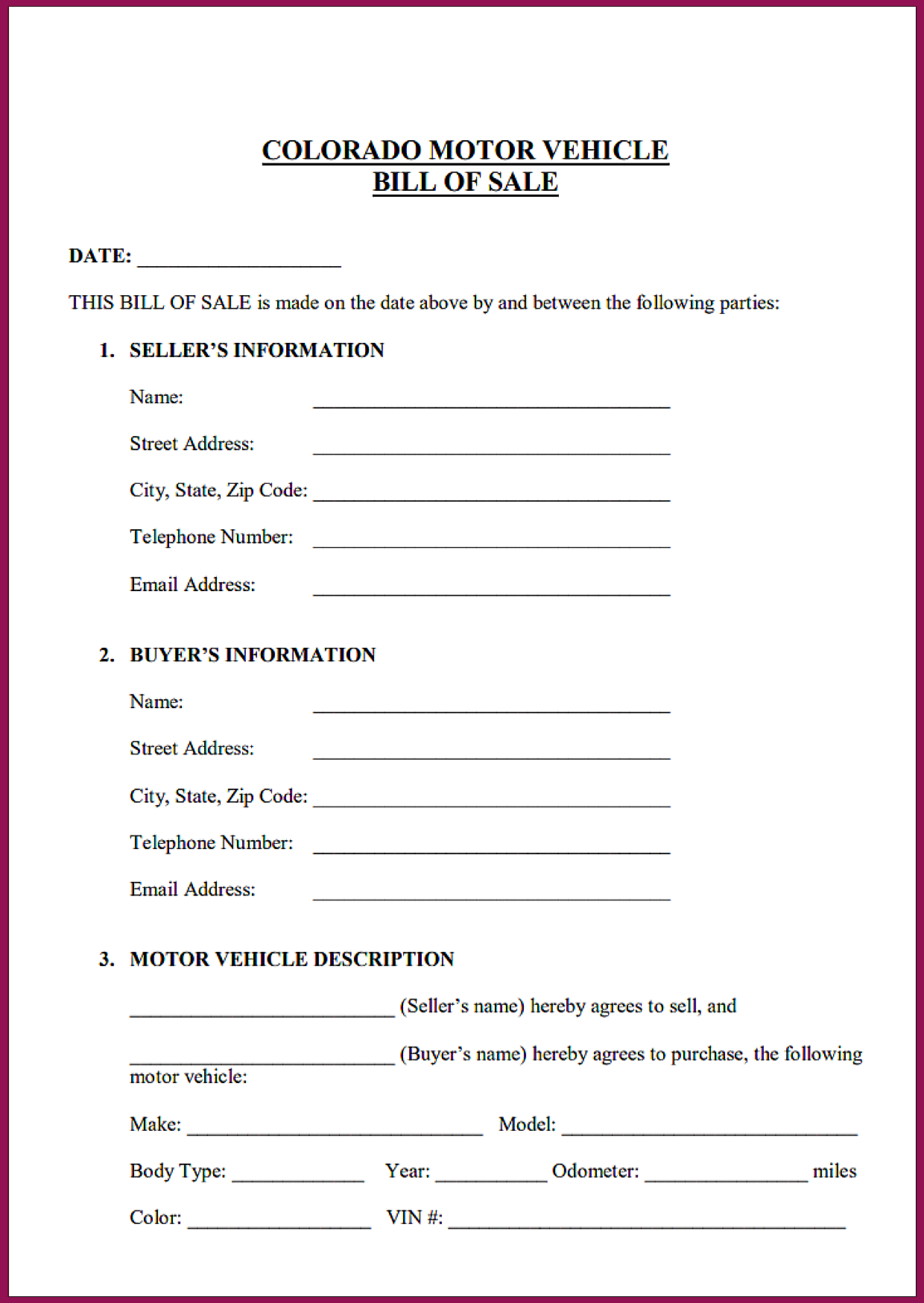
Over the years, I’ve had countless clients walk into my office asking if they really need to pay someone to draft a bill of sale. The truth is, a free Colorado DMV Bill of Sale template can absolutely work — if it’s done correctly. I’ve reviewed plenty of “free” templates that were missing critical details like the full VIN, odometer disclosure, or proper identification of the buyer and seller. When those details are missing, the DMV doesn’t care that the template was free — they care that it’s incomplete.
In Colorado, what matters isn’t how much you paid for the form — it’s whether the document accurately reflects the transfer and protects you if a dispute arises. I always tell clients that a properly completed template can serve just as well as a custom-drafted document for standard private sales. And yes, for your convenience, you can download the PDF format of this template below and keep a copy for your records.
Colorado DMV Bill of Sale Form
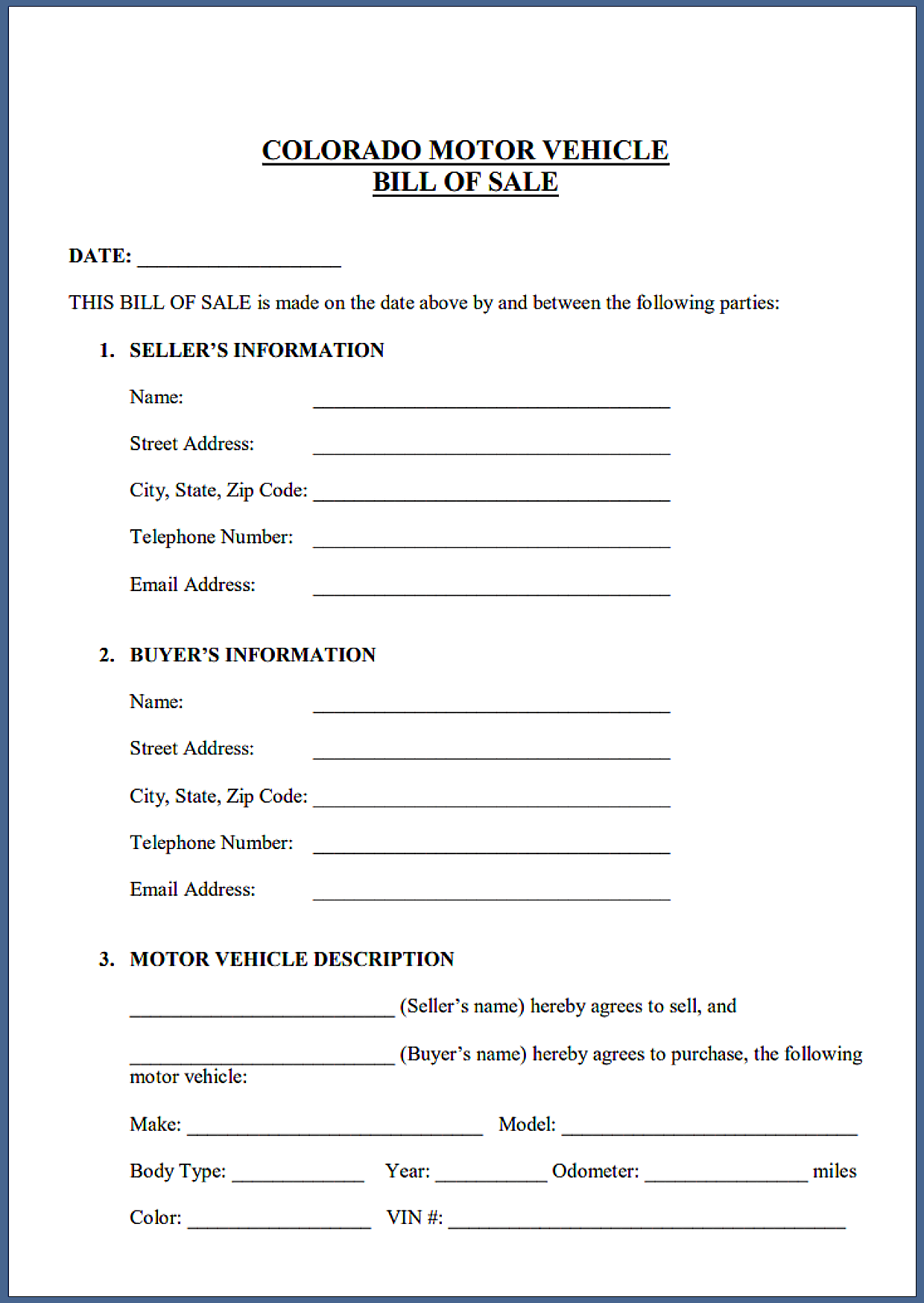
When someone asks me about the official Colorado DMV Bill of Sale form, I immediately think of Form DR 2173 used by the Colorado Division of Motor Vehicles. In my practice, I strongly prefer using the state-recognized form because it reduces questions at the county clerk’s office. I’ve seen buyers turned away over small technicalities simply because their paperwork didn’t match what the DMV expects.
The official form ensures you include the sale date, purchase price, vehicle details, and both parties’ signatures — all elements that become extremely important if tax issues or ownership disputes surface later. Using the correct format shows the county that the transaction was handled properly from the start. You can also download the PDF format of the Colorado DMV Bill of Sale form below to make sure you’re using the correct version.
Colorado DMV Bill of Sale PDF
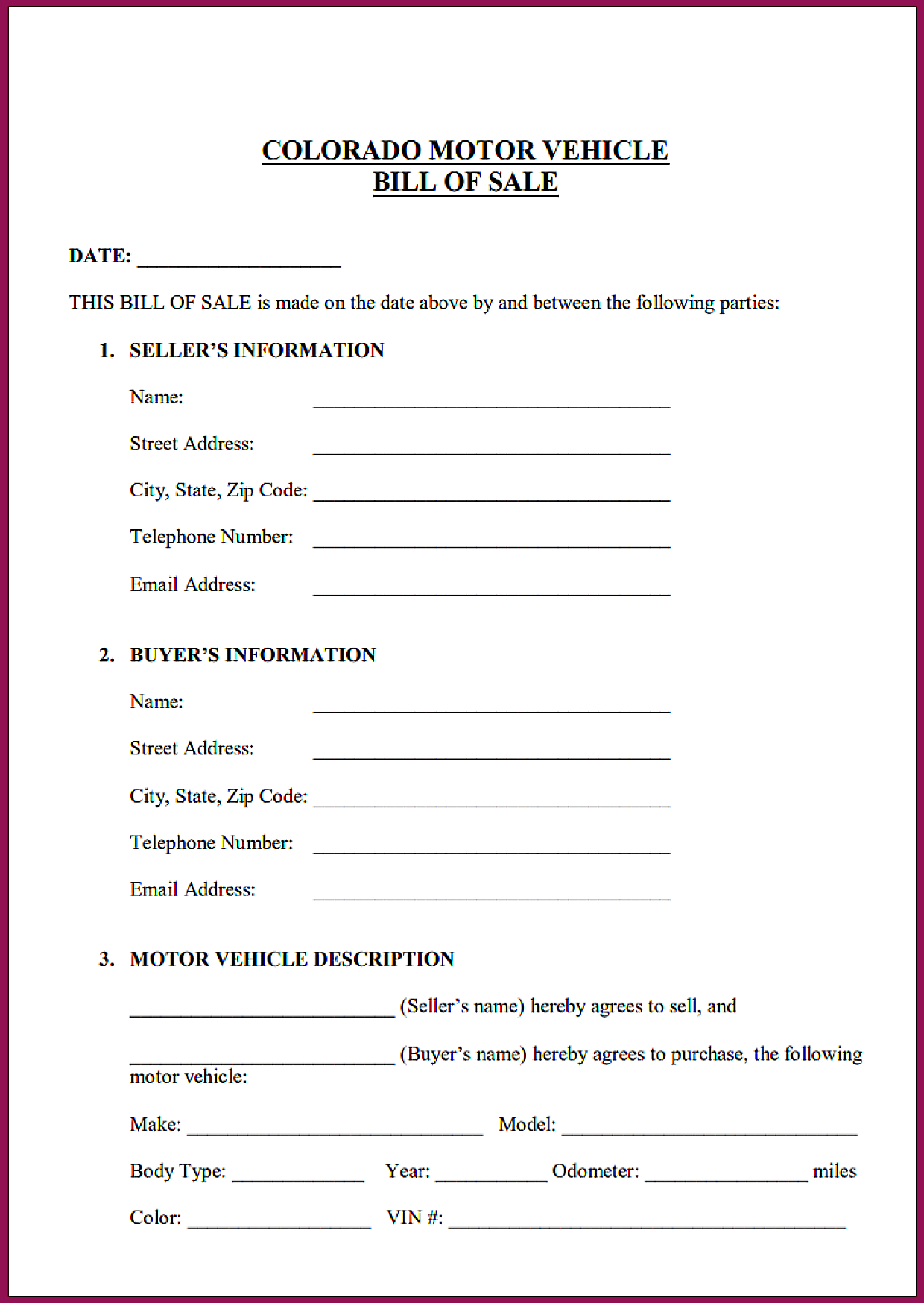
I personally prefer working with a Colorado DMV Bill of Sale PDF rather than a loosely written handwritten document. PDFs reduce errors, keep formatting consistent, and make it easier to store digital copies. In today’s world, having a clean electronic record can save you from major headaches if questions come up months down the road.
I’ve had cases where clients lost their only paper copy and suddenly needed proof of the sale date to avoid penalties or tax complications. Having a downloadable and printable PDF version gives you something concrete to rely on. For your convenience, you can download the PDF format below and keep both printed and digital copies for protection.
Colorado DMV Bill of Sale Template
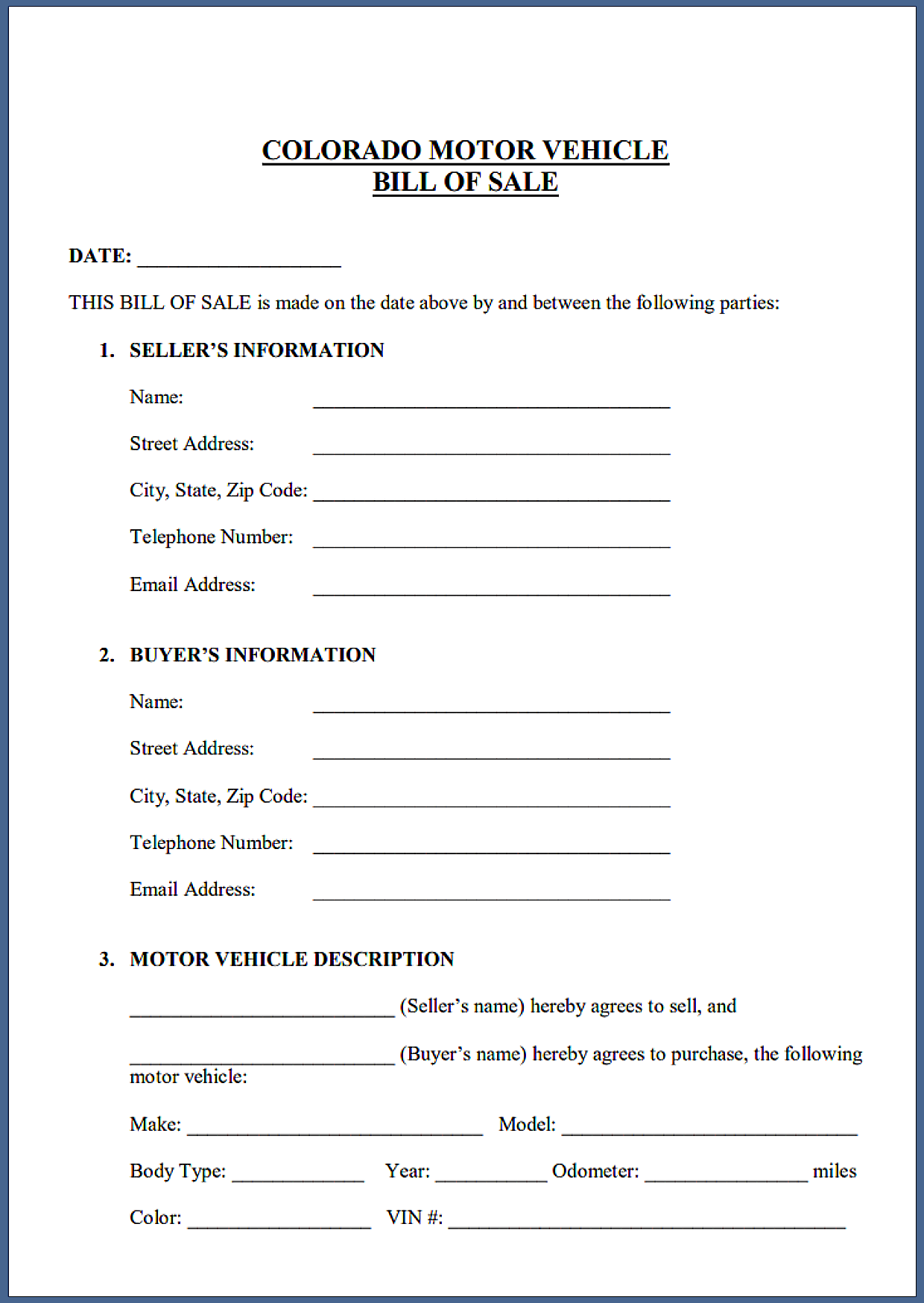
In my experience handling private vehicle transfers across Colorado, a structured Colorado DMV Bill of Sale template provides clarity that handshake agreements simply cannot. I’ve seen disputes arise not because someone intended to deceive the other party — but because expectations weren’t clearly documented. A detailed template forces both sides to slow down and confirm the essential facts before money changes hands.
Personally, I always recommend using a template that mirrors Colorado DMV standards, especially when dealing with higher-value vehicles, salvage titles, or out-of-county transactions. It creates consistency and minimizes room for disagreement later. You can download the PDF format of this Colorado DMV Bill of Sale template below and use it for your transaction.
Does Colorado Require a Bill of Sale?
Short answer? Sometimes yes, sometimes practically yes.
Colorado doesn’t require a Bill of Sale for every single vehicle transfer if the title is properly assigned. However, I strongly prefer using one in almost every private sale. Here’s why:
I’ve seen:
-
Buyers show up claiming they paid less than they actually did to reduce taxes.
-
Sellers get parking tickets months later because the buyer never registered the vehicle.
-
Disputes over whether payment was made in full.
A Bill of Sale creates a paper trail. And when things go wrong — and occasionally they do — that paper trail matters.
The Official Colorado Form
The Colorado DMV provides Form DR 2173 – Motor Vehicle Bill of Sale through the Colorado Division of Motor Vehicles.
You can also draft your own, but in my experience, using the state’s form avoids arguments later. County clerks like seeing it. It feels official. It reduces questions.
What must be included:
-
Date of sale
-
Buyer and seller full legal names and addresses
-
Vehicle description (year, make, model, VIN)
-
Purchase price
-
Signatures of both parties
If it’s missing the VIN or the price? I’ve seen county clerks reject paperwork over that.
Why the Sale Price Matters More Than You Think
Let me tell you something people don’t always realize.
Colorado calculates sales tax based on:
-
The purchase price, or
-
The vehicle’s fair market value (if the DMV thinks the price looks suspiciously low)
I once had a client who bought a truck for $5,000 but wrote $500 on the Bill of Sale because “that’s what the seller told me to do.” The county flagged it. The buyer ended up paying taxes based on NADA value anyway — plus penalties.
Personally, I always recommend writing the actual purchase price. Trying to “save a little tax” can cost more later.
Title + Bill of Sale = Complete Protection
In Colorado, the title is king. The seller must properly complete the assignment section on the back of the title.
But here’s where I’ve seen problems:
-
Seller forgets to sign.
-
Odometer disclosure is incomplete.
-
Name doesn’t match ID.
-
Title has an old lien still listed.
When that happens, the buyer cannot register the vehicle at the county motor vehicle office.
The Bill of Sale won’t fix a bad title — but it will help establish what the agreement was.
Emissions & County Differences
Colorado is not one-size-fits-all.
If you’re selling in emissions-required counties like:
-
Denver
-
Jefferson
-
Boulder
-
Adams
You’ll likely need an emissions test before the buyer can register.
I’ve had buyers call me frustrated because they didn’t know this until they were at the DMV counter. It’s avoidable — but only if someone tells you ahead of time.
The 60-Day Rule & Late Fees
Buyers in Colorado have 60 days to register a vehicle after purchase. After that? Late fees stack up.
I’ve seen late fees reach several hundred dollars.
From a seller’s perspective, I always recommend submitting a Release of Liability (Notice of Transfer) with your county. That protects you if the buyer never registers and racks up tolls or tickets.
This step is simple — and skipping it is one of the most common mistakes I see.
What About “As-Is” Sales?
In private-party sales, vehicles are generally sold “as-is” unless a written warranty is provided.
But here’s the tricky part.
If a seller knowingly hides a major defect (say, a blown transmission they temporarily masked), that can still create legal problems. I’ve handled small claims disputes over exactly this.
If you’re selling:
Be honest.
If you’re buying:
Get it inspected.
Simple advice — but it saves thousands.
Common Mistakes I See in My Colorado Practice
Over the years, the most common issues I’ve dealt with include:
-
Handwritten Bills of Sale with missing VIN digits
-
Titles signed in the wrong place
-
Buyer never registering the vehicle
-
Seller not removing plates
-
Not checking for liens
Plates stay with the seller in Colorado. I can’t tell you how many times someone forgot that and ended up dealing with toll violations.
My Practical Advice (If You Were Sitting in My Office)
If you were across my desk right now, here’s what I’d tell you:
-
Use Form DR 2173.
-
Fill out the title carefully — no cross-outs.
-
Write the real purchase price.
-
Remove your plates.
-
File a Notice of Transfer.
-
Keep copies of everything.
It’s not complicated — but details matter.
A Quick Legal Reality Check
Every situation is a little different. If there’s:
-
A lien involved
-
An estate sale
-
A lost title
-
A rebuilt or salvage vehicle
-
A title dispute
The process changes.
This isn’t formal legal advice — just practical guidance based on years of handling Colorado vehicle cases. If your situation is unique, it’s worth getting specific advice before signing anything.
Final Thoughts
What I’ve learned after years working with Colorado DMV paperwork is this:
Most problems don’t come from bad intentions — they come from rushed paperwork.
Slow down. Fill it out correctly. Keep records.
If you have a question about your Colorado Bill of Sale, a title issue, or a DMV problem that doesn’t feel right, feel free to reach out or drop a comment. I’m always happy to point you in the right direction.
FAQ
Do I legally need a Bill of Sale in Colorado?
Not always — but in my experience, you almost always should have one.
Colorado doesn’t require a Bill of Sale if the title is properly assigned and complete. However, I’ve seen too many disputes over payment dates, sale price, and even whether the vehicle was actually sold. A Colorado DMV Bill of Sale creates a written record of the transaction. If a disagreement arises later, that document can make all the difference.
Personally, I consider it basic protection in any private-party sale.
What information must be included in a Colorado DMV Bill of Sale?
At minimum, it should include:
-
Date of sale
-
Buyer and seller full legal names and addresses
-
Vehicle year, make, model
-
Full 17-digit VIN
-
Purchase price
-
Signatures of both parties
I’ve seen transactions delayed at county motor vehicle offices because one digit of the VIN was missing. That small mistake can cost time and money. Accuracy matters more than people think.
Is the official Colorado DMV form required?
The Colorado Division of Motor Vehicles provides Form DR 2173, which is widely accepted. While you technically can draft your own document, I strongly prefer using the state-recognized format.
Why? Because county clerks are familiar with it. It reduces questions. And in my experience, fewer questions at the counter means fewer delays.
Does the Bill of Sale need to be notarized in Colorado?
Generally, no — notarization is not required for a standard private vehicle sale.
That said, if there’s a high-value transaction, an out-of-state buyer, or a situation where trust is limited, I sometimes recommend notarizing it anyway. It adds another layer of credibility if the document is ever challenged.
Leave a Reply