If you’ve ever bought or sold a trailer in Colorado, you already know it’s not as simple as handing over cash and a handshake. A Trailer Bill of Sale Colorado is a legal document that records the transfer of ownership of a trailer from one party to another — and in my years practicing law here in Colorado, I’ve seen that single piece of paper prevent more disputes than almost anything else in a private sale.
I’m John Riley, and I’ve handled real cases involving trailer title issues, missing VINs, bonded title applications, and frustrated buyers standing at the county DMV window wondering why their paperwork was rejected. From ranchers in Weld County to contractors in Colorado Springs and weekend campers near Grand Junction, I’ve seen how small mistakes in documentation turn into expensive problems.
So when I talk about a trailer bill of sale, I’m not speaking in theory. I’m speaking from experience — the kind that comes from cleaning up avoidable messes. Let me walk you through how this really works here in Colorado, the way I explain it to clients sitting across from me in my office.
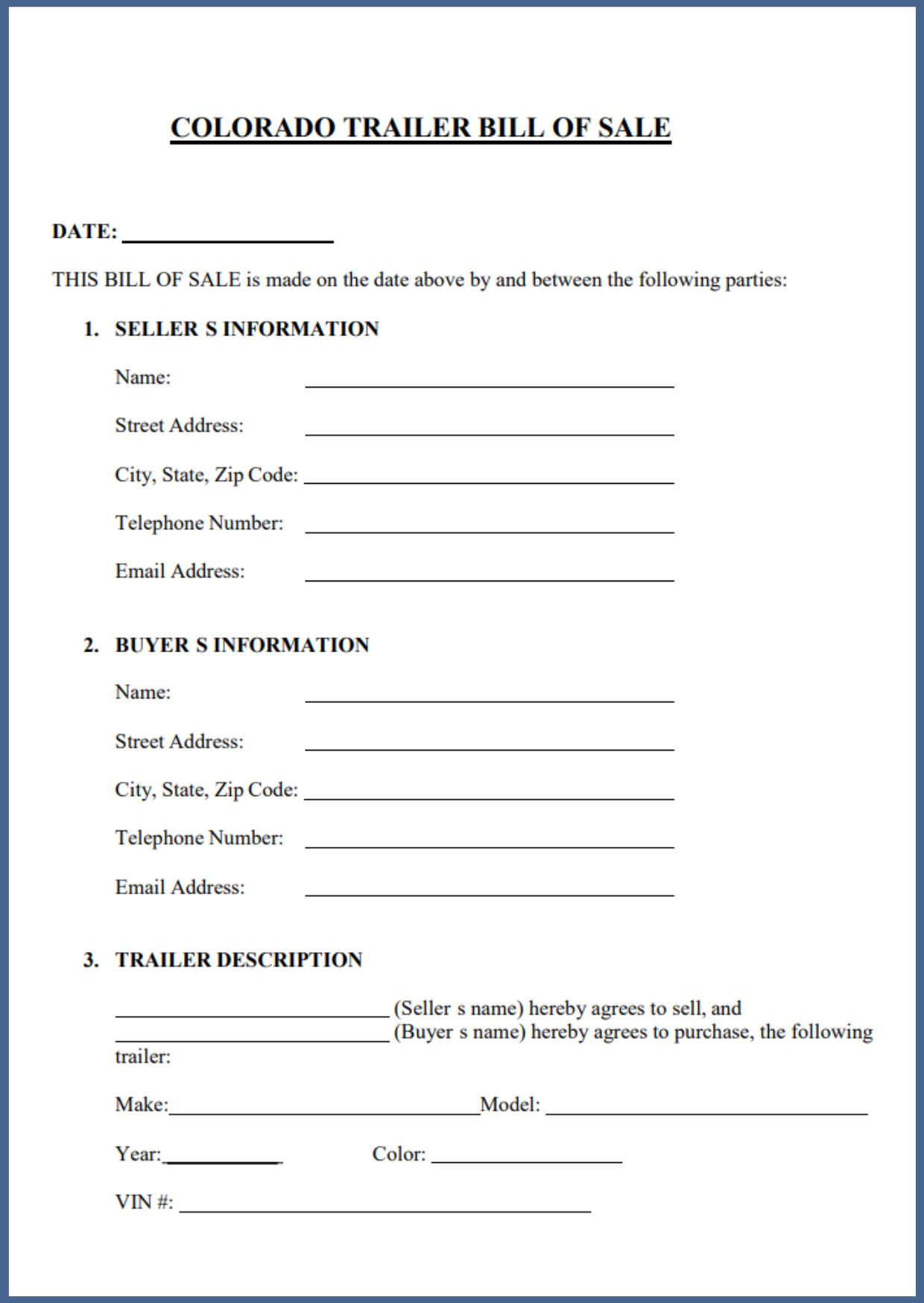
Free Printable Trailer Bill of Sale Colorado Templates
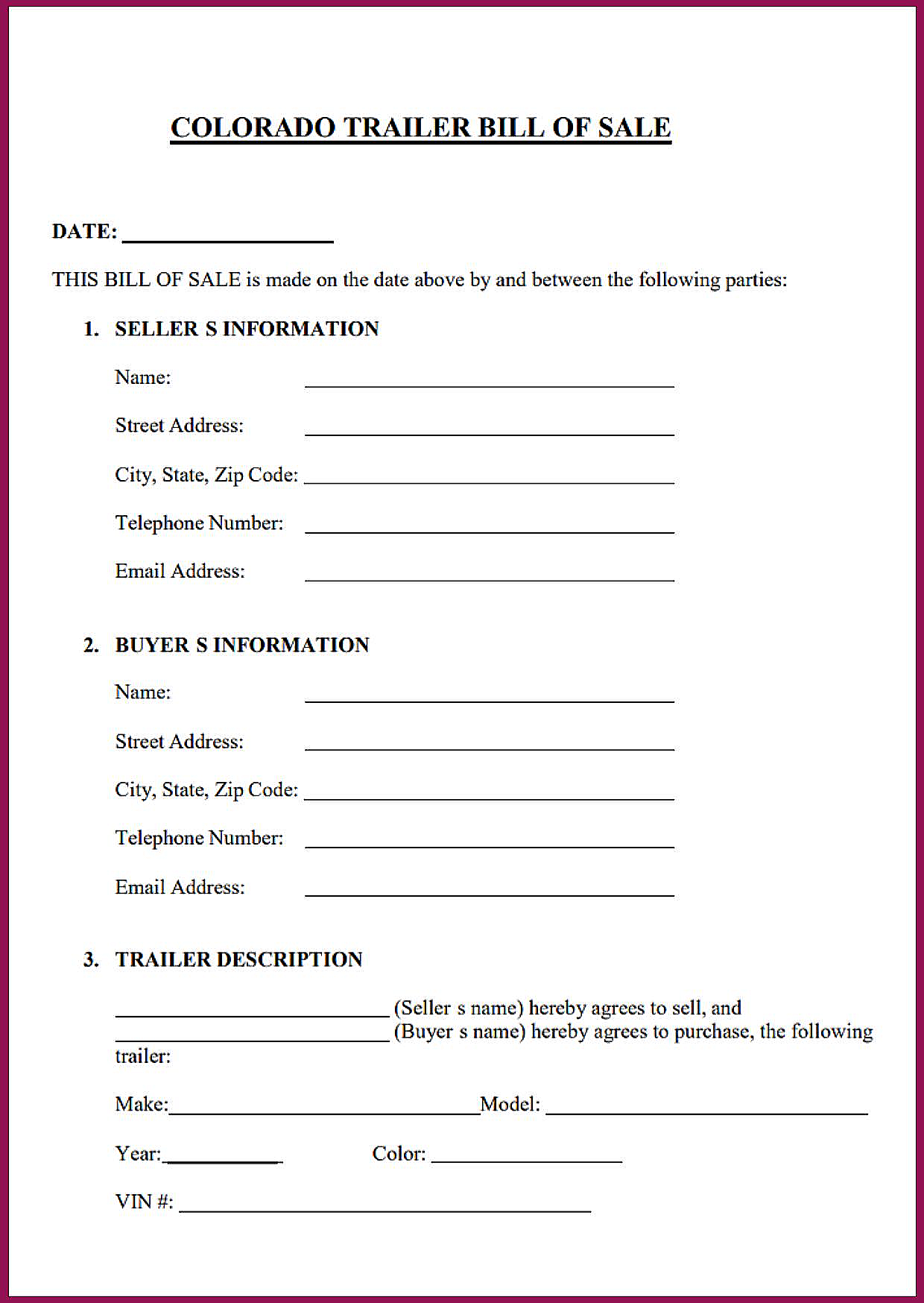
Over the years, I’ve had clients walk into my office asking, “John, can’t I just download something simple and fill it out?” And honestly, yes — you can. A free printable Trailer Bill of Sale Colorado template can work perfectly fine, if it’s drafted correctly and includes the information Colorado county motor vehicle offices actually look for.
In my experience handling private-party trailer sales across Colorado, most problems happen because people download incomplete templates. Missing VIN numbers, no purchase price, or unclear buyer-seller identification — that’s what causes DMV rejection. Personally, I always recommend using a clean, well-structured template that clearly records ownership transfer details. For your convenience, I’ve also included the PDF format for download, so you can print it, fill it out properly, and avoid unnecessary legal headaches.
Boat Trailer Bill of Sale Colorado
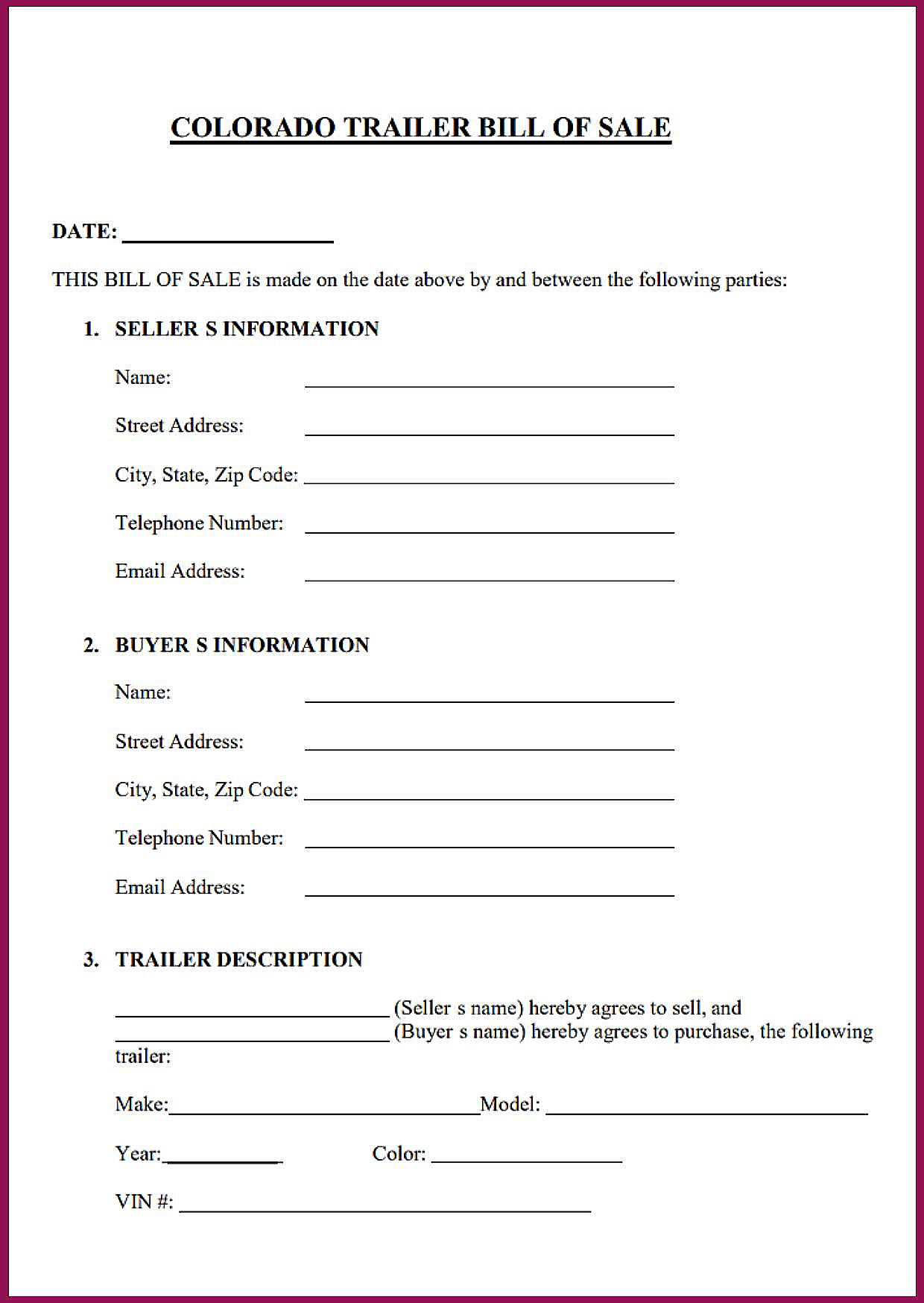
Boat trailers create a unique layer of confusion in Colorado because sometimes people focus on the boat title and forget the trailer is a separate legal asset. I’ve seen buyers properly transfer a boat title but completely overlook the trailer documentation — and that becomes a problem when they try to register it.
When preparing a boat trailer bill of sale in Colorado, I always stress the importance of including the trailer’s VIN, weight classification, and accurate sale price. Some counties are stricter than others, but consistency protects you everywhere. If you’re buying or selling a boat trailer, document it carefully. I’ve provided a downloadable PDF version so you can complete it correctly and keep a proper record for DMV purposes.
Travel Trailer Bill of Sale Colorado
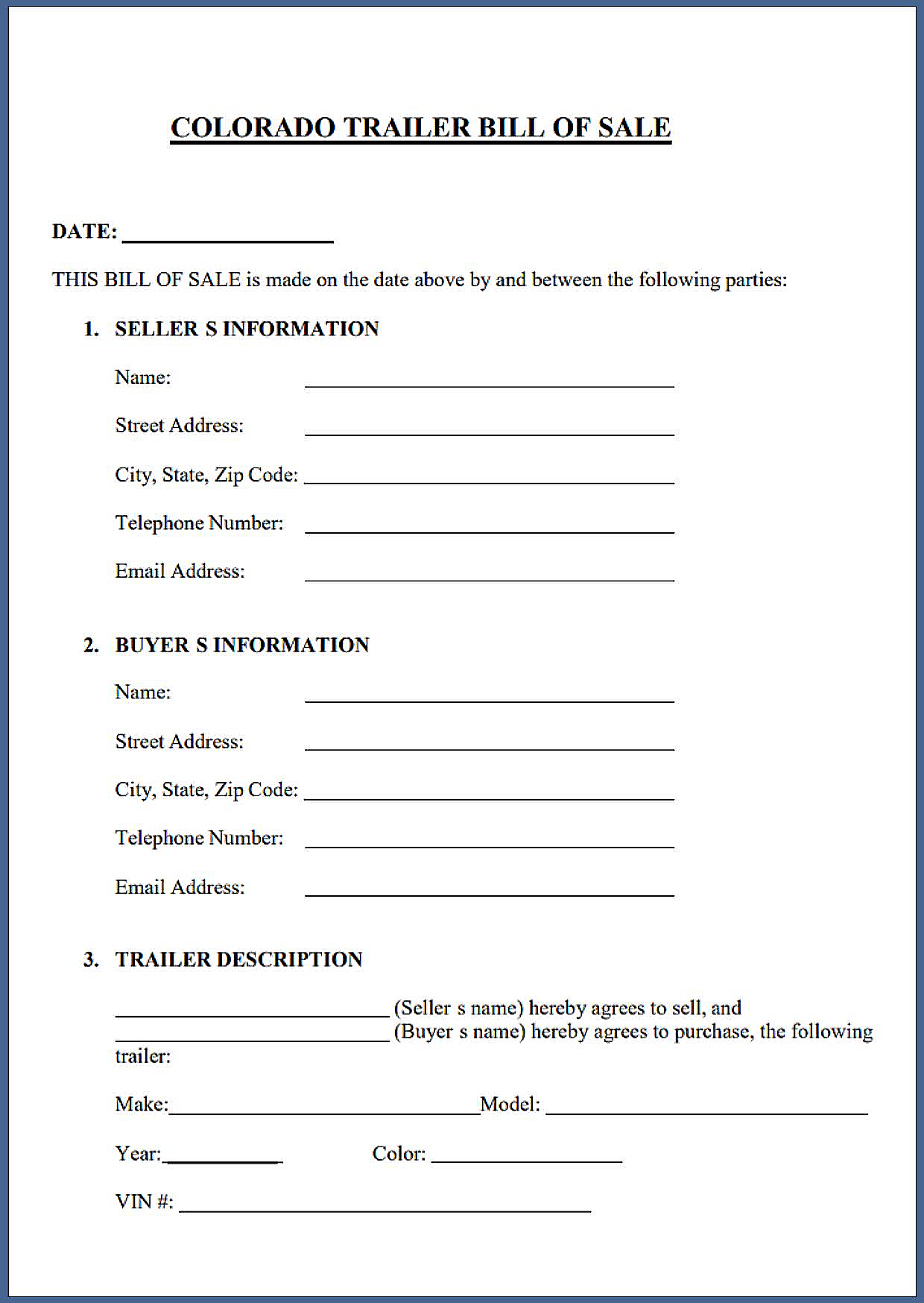
Travel trailers are different from small utility trailers because many of them are titled similarly to vehicles, especially if they meet weight and road-use requirements. In my legal practice, I’ve dealt with several disputes involving travel trailers where the title assignment wasn’t completed correctly — and trust me, fixing that later is much harder than doing it right the first time.
A travel trailer bill of sale in Colorado should clearly reference the title number, VIN, year, make, and agreed purchase price. I personally prefer adding an “as-is” clause to protect sellers from future mechanical complaints. Clear documentation prevents misunderstandings and protects both parties legally. I’ve also added the downloadable PDF format so you can access, print, and complete it properly before heading to your county office.
Colorado Trailer Bill of Sale PDF
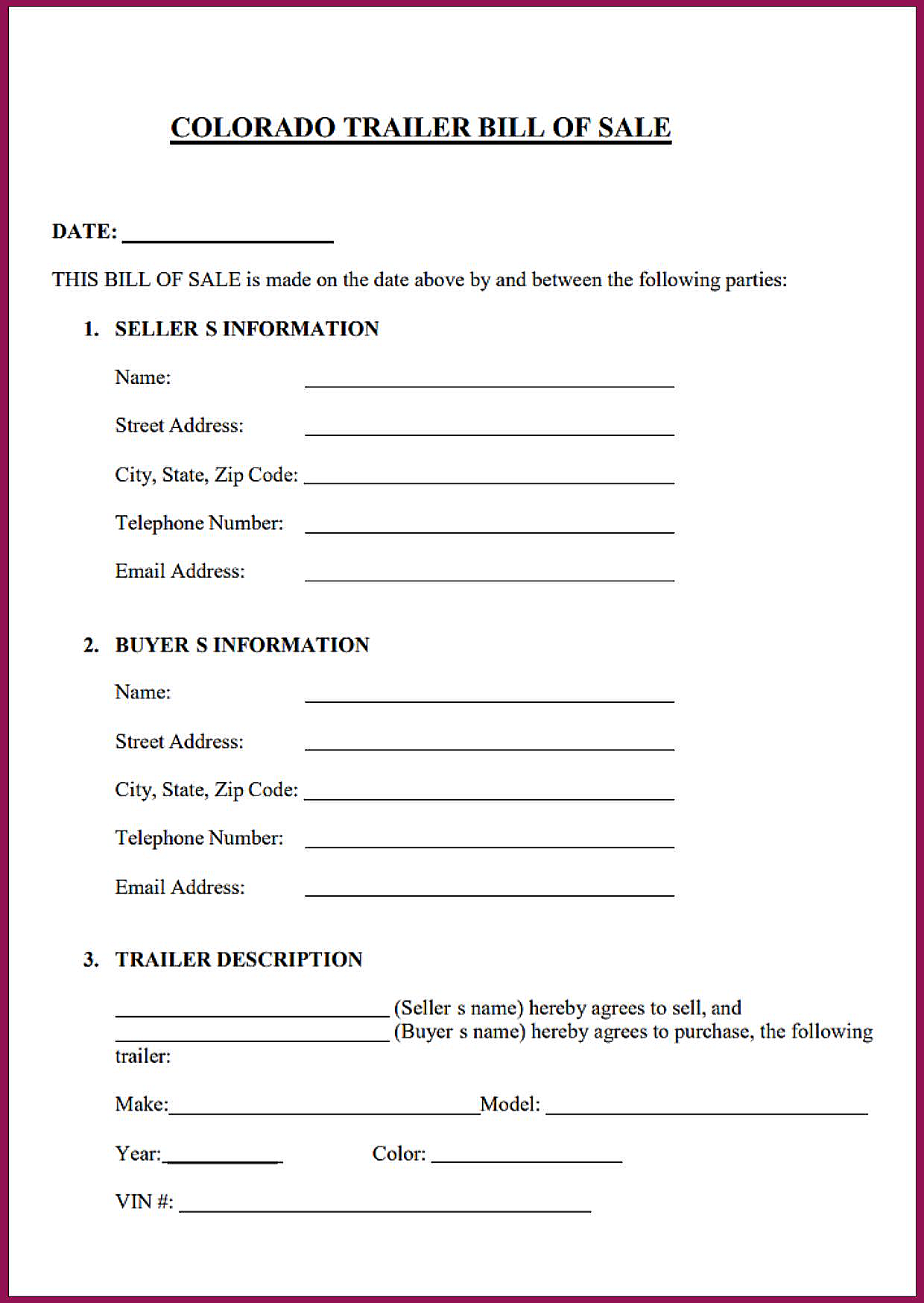
Many of my clients simply want one thing — a properly formatted Colorado Trailer Bill of Sale PDF they can download, print, and use immediately. I completely understand that. When you’re closing a deal in a parking lot or someone’s driveway, you don’t want legal confusion.
That’s exactly why having a structured PDF version matters. It ensures all required ownership details are recorded, helps with accurate tax reporting, and creates written proof of transfer if a dispute arises later. From years of handling trailer-related title corrections, I can confidently say documentation solves most problems before they start. You can download the PDF version here and use it confidently knowing it reflects real-world Colorado legal requirements.
First Things First: Does Your Trailer Need a Title in Colorado?
Here’s where people get tripped up.
In Colorado, most trailers do require a title, especially if they’re designed for road use and meet certain weight requirements. The key cutoff most counties focus on is whether the trailer is used on public highways and whether it exceeds 2,000 pounds empty weight.
Smaller utility trailers under 2,000 pounds may not have been titled historically — but that doesn’t mean you can skip documentation.
I’ve handled cases where someone bought a used flatbed trailer off Facebook Marketplace with “no title needed.” Then they tried to register it at the county DMV and got stuck because there was no clear chain of ownership. That’s when they call me.
What I’ve learned is this:
Even if a title isn’t required, a proper bill of sale is absolutely essential.
Colorado Doesn’t Have One Mandatory Statewide Form — But That Doesn’t Mean It’s Casual
Unlike some states, Colorado doesn’t force you to use a single official trailer bill of sale form. However, many county motor vehicle offices provide templates. The DMV recognizes basic bills of sale as long as they include required details.
That said, I strongly prefer using a detailed written bill of sale that includes:
-
Full legal names and addresses of buyer and seller
-
Trailer description (make, model, year, color)
-
VIN or serial number (this is huge)
-
Purchase price
-
Date of sale
-
Odometer disclosure (if applicable — usually not for trailers)
-
Signatures from both parties
If the trailer is titled, the title itself must be properly signed over. The bill of sale does not replace the title.
I can’t tell you how many times I’ve seen someone forget to record the VIN. Without it, the document is nearly useless if a dispute arises.
The VIN Matters More Than You Think
If there’s one thing I repeat to clients, it’s this:
Always verify the VIN before money changes hands.
I’ve handled disputes where the VIN on the title didn’t match the VIN stamped on the trailer frame. Sometimes it’s a simple clerical error. Other times, it’s a much bigger issue.
In Colorado, if the VIN is missing or altered, the buyer may have to go through a Certified VIN Inspection and potentially apply for a bonded title. That process takes time, costs money, and frustrates everyone involved.
Personally, I tell buyers:
Take five minutes and physically inspect the VIN plate or stamped frame before signing anything.
Private Party Sales vs. Dealer Sales
Most trailer transfers I see are private-party deals.
When buying from a licensed Colorado dealer, they usually handle title paperwork and submit documents to the county clerk and recorder. That’s smoother.
Private-party sales? That’s where mistakes happen.
Here’s what I’ve seen go wrong:
-
Seller forgets to remove plates
-
Buyer waits too long to register
-
Title isn’t properly assigned
-
Purchase price is underreported (which can create tax issues)
Colorado requires the buyer to register the trailer in their county of residence. Sales tax is based on the purchase price listed.
I’ll be honest — I’ve seen people try to write “$100” on a bill of sale to reduce tax. That can backfire. If the DMV suspects undervaluation, they can request additional documentation or assess tax differently.
It’s just not worth the headache.
Why I Always Recommend a Clear “As-Is” Clause
I always include an “as-is” statement in trailer bill of sale documents unless the seller is providing a warranty.
Why? Because trailers break. Axles bend. Wiring fails. Bearings go bad.
Without an as-is clause, I’ve seen buyers try to come back weeks later claiming misrepresentation. A properly worded bill of sale protects both sides by clearly stating the trailer is sold without warranties unless otherwise stated.
It’s simple protection.
What Happens If There’s No Title?
This is where my phone rings the most.
If the trailer should have a Colorado title but doesn’t, the buyer may need to:
-
Contact the previous titled owner
-
Apply for a bonded title
-
Provide a VIN inspection
-
Show proof of ownership through bills of sale
The bonded title process in Colorado requires purchasing a surety bond for 1.5 times the trailer’s value. That bond stays in place for three years.
It’s doable. I’ve guided many clients through it. But it’s far easier to demand a clean, signed title before paying.
Timing Matters More Than People Realize
Colorado buyers generally have 60 days to transfer a title without late penalties. After that, late fees can apply.
I’ve seen buyers let paperwork sit in a drawer for months — then get hit with penalties when they finally show up at the county office.
If you buy a trailer, go register it promptly. Don’t procrastinate.
A Real-World Scenario I See Often
Let’s say someone in Pueblo buys a used utility trailer for landscaping work. The seller hands over a title but forgets to sign it in the correct assignment section. The buyer doesn’t notice.
Two months later, the buyer tries to register it. The DMV rejects the title because it’s incomplete. Now the buyer can’t find the seller.
That turns into a legal cleanup process — sometimes involving affidavits, bonded title applications, or even small claims issues.
That’s why I tell clients:
Review the title and bill of sale together before you leave the parking lot.
My Practical Advice After Years of Handling These Cases
If you’re buying:
-
Verify the VIN physically
-
Confirm the seller’s ID matches the title
-
Ensure the title is properly assigned
-
Get a detailed bill of sale
-
Register quickly
If you’re selling:
-
Keep a copy of the bill of sale
-
Remove plates if required
-
Notify the county if necessary
-
Protect yourself with an as-is clause
These small steps prevent the majority of disputes I’ve handled over the years.
A Quick Legal Note (Because I Have to Say It)
This is general information based on my experience practicing here in Colorado. Every situation can have its own complications, especially if there are liens, inherited trailers, or missing documentation. If you’re unsure about your specific situation, get personalized legal advice before proceeding.
It’s far cheaper to prevent a problem than fix one later.
FAQs
Is a Trailer Bill of Sale required in Colorado?
In many private sales, yes — and even when it’s not strictly mandatory by statute, I strongly recommend it. In Colorado, the title is the primary ownership document for most trailers, but a properly written Trailer Bill of Sale Colorado serves as proof of the transaction, purchase price, and date of transfer. I’ve seen situations where the title was signed, but later a dispute arose about payment. The bill of sale cleared it up instantly.
From a practical standpoint, county motor vehicle offices often rely on the purchase price listed in the bill of sale for tax purposes. So even if someone tells you “it’s not required,” in real-world Colorado transactions, it’s an important layer of protection.
What information must be included in a Colorado trailer bill of sale?
At minimum, I always insist on full legal names and addresses of both parties, the trailer’s VIN, make, model, year (if available), purchase price, and the date of sale. Signatures from both buyer and seller are non-negotiable in my book.
I’ve handled cases where someone left out the VIN, thinking the title was enough. When paperwork gets separated or questioned at the DMV, that missing detail becomes a real problem. Clear identification of the trailer is what protects you from ownership disputes down the road.
Can I register a trailer in Colorado without a bill of sale?
Sometimes — but it depends on the situation. If you have a properly assigned Colorado title, that may be sufficient. However, if there’s any discrepancy, missing information, or bonded title situation, the DMV may request additional documentation, including a bill of sale.
I’ve seen buyers assume the title alone would carry them through, only to be turned away at the counter because the purchase price wasn’t clearly documented. Personally, I tell clients: bring more documentation than you think you need. It’s easier than making a second trip.
What happens if I lose my trailer bill of sale?
If the title transfer was completed and registered properly, losing the bill of sale may not be catastrophic. But if the trailer hasn’t yet been transferred, or if there’s a dispute about payment or ownership, not having that document can create unnecessary complications.
In cases I’ve handled, we sometimes had to reconstruct the transaction with affidavits or additional proof. That takes time and effort. I always advise both buyers and sellers to keep a signed copy for their records — even just a scanned PDF saved securely can prevent future stress.
Leave a Reply