If you’ve ever sat across from me in my Colorado office after a vehicle deal went sideways, you already know this: most car problems don’t start with the engine — they start with paperwork. In Colorado, the Colorado Motor Vehicle Bill of Sale is the written document that legally records the transfer of ownership between a buyer and seller. It may look simple, but in my years of handling vehicle transfers, title disputes, and DMV complications across the state, I’ve seen that this one document can either protect you completely — or create months of frustration if done incorrectly.
I’ve represented clients from Denver to Colorado Springs who thought a handshake was enough. I’ve seen buyers stuck with vehicles they couldn’t register because the paperwork wasn’t properly completed. I’ve seen sellers chased for toll violations and parking tickets long after they believed the vehicle was “no longer theirs.” Almost every time, the issue traces back to one thing — a poorly handled or missing Bill of Sale.
So let’s talk about how this really works in Colorado — not just what the form says, but what actually happens when deals go wrong.
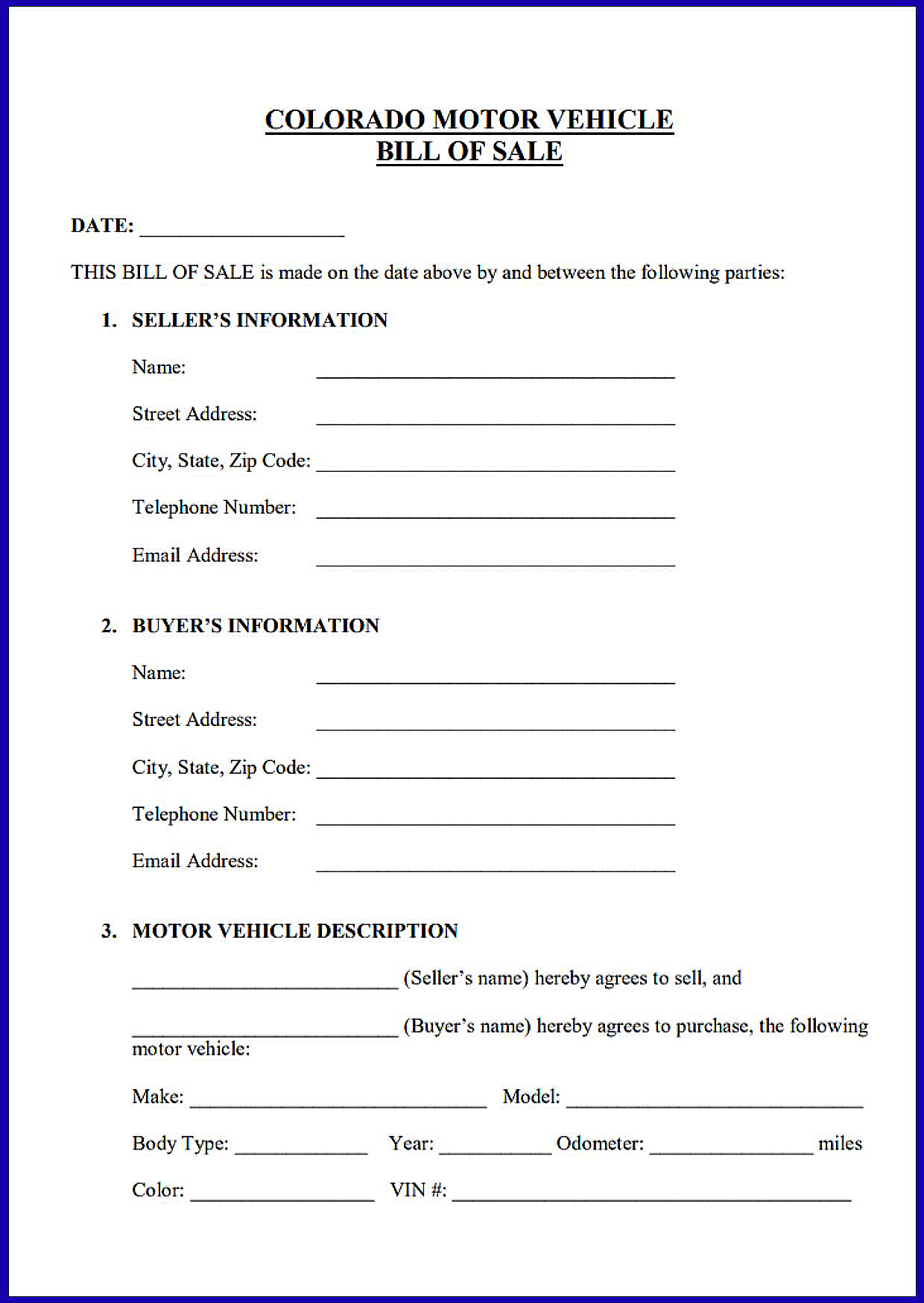
Colorado Motor Vehicle Bill of Sale Templates
Over the years, I’ve had clients walk into my office thinking any generic template printed from the internet would work for their vehicle sale. In Colorado, that assumption can cause real problems. A proper Colorado Motor Vehicle Bill of Sale template isn’t just a fill-in-the-blank sheet — it needs to reflect Colorado title laws, odometer disclosure requirements, and DMV standards that county clerks actually enforce. I’ve seen templates missing VIN fields, incorrect sale language, or incomplete buyer details, and those small gaps can delay registration or even trigger title disputes.
Personally, I always recommend using a template that aligns with Colorado DMV expectations. A clean, properly structured template protects both buyer and seller and creates a clear legal record of the transaction. For your convenience, I’ve also provided the PDF format of these templates so you can download and use them confidently before finalizing your vehicle transfer. Having the right template upfront saves far more time and stress than trying to fix paperwork later.
Colorado Motor Vehicle Bill of Sale Form
When clients ask me about the official Colorado Motor Vehicle Bill of Sale form, I immediately point them to Form DR 2173. That’s the standardized form recognized across Colorado counties. While the state may not require it in every single transaction, in my legal experience, using the proper form dramatically reduces disputes. I’ve seen handwritten bills of sale create confusion because key elements were left out — especially odometer readings and accurate VIN entries.
What I’ve learned from handling real DMV issues is this: clarity wins every time. The official Colorado Motor Vehicle Bill of Sale form creates structure and eliminates guesswork. It documents the sale price, vehicle details, and the date of transfer — all critical if questions arise later. I’ve included the PDF format of the official form so you can download it directly and ensure your transaction is documented properly from the start.
Colorado Department of Motor Vehicle Bill of Sale
The Colorado Department of Motor Vehicle Bill of Sale isn’t just paperwork — it’s part of the state’s vehicle transfer framework. When I work with clients dealing with delayed registrations or rejected title transfers, one of the first things I review is whether the DMV-compliant bill of sale was completed accurately. The Colorado Department of Revenue, which oversees motor vehicle services, expects precise information that matches the assigned title. Even small discrepancies can cause registration delays.
In my experience, using the correct DMV-aligned bill of sale creates consistency between the seller’s documentation and the buyer’s registration application. That consistency matters more than most people realize. To make things easier, I’ve provided the downloadable PDF format of the Colorado Department of Motor Vehicle Bill of Sale so you can complete it correctly and avoid unnecessary back-and-forth with your county clerk’s office.
Colorado DMV Motor Vehicle Bill of Sale
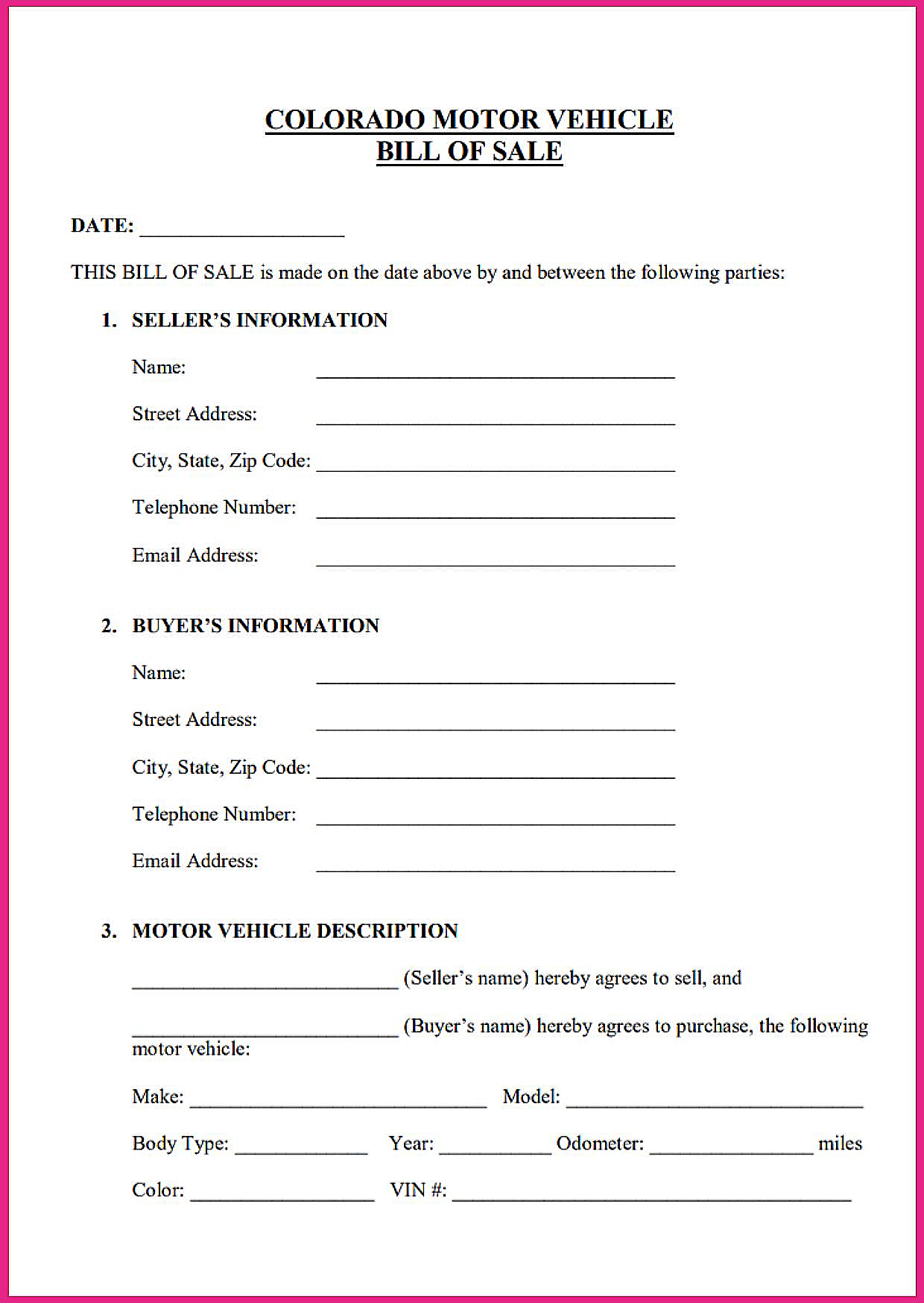
When people refer to the Colorado DMV Motor Vehicle Bill of Sale, they’re usually talking about the standardized document recognized by county motor vehicle offices statewide. I’ve personally handled cases where buyers showed up at the DMV with incomplete paperwork and were turned away — sometimes multiple times. That’s frustrating, especially when a simple, properly completed bill of sale could have prevented it.
What I strongly advise is this: treat the DMV bill of sale as a protective document, not just a formality. It establishes the exact date ownership changed hands and can shield sellers from liability after the sale. It also supports buyers during registration and tax assessment. For your convenience, I’ve included the PDF format of the Colorado DMV Motor Vehicle Bill of Sale so you can download it and complete your transaction properly the first time.
Is a Bill of Sale Required in Colorado?
Here’s what I tell clients: technically, Colorado doesn’t always require a Bill of Sale for every vehicle transfer if you have a properly assigned title.
But in my experience? I strongly prefer having one. Every single time.
The Colorado DMV provides a standard form — Form DR 2173 (Motor Vehicle Bill of Sale). I’ve used it in countless transactions. It’s simple, clean, and it holds up well if something later gets questioned.
Why does it matter?
Because titles get filled out incorrectly all the time. Odometer disclosures get missed. Purchase prices get “estimated.” Dates get forgotten. And when that happens, the Bill of Sale becomes your backup evidence of what actually occurred.
I’ve seen judges rely on it. I’ve seen investigators rely on it. I rely on it.
What Needs to Be Included (And Why It Actually Matters)
A proper Colorado motor vehicle Bill of Sale should include:
-
Full legal names and addresses of buyer and seller
-
Vehicle description (year, make, model)
-
VIN (Vehicle Identification Number)
-
Purchase price
-
Date of sale
-
Odometer reading
-
Signatures of both parties
Now let me explain why each of these matters — because this isn’t just paperwork for paperwork’s sake.
The VIN
I once handled a dispute where two similar trucks were sold on the same day. The Bill of Sale had the wrong VIN — one digit off. That one mistake turned into weeks of DMV confusion and a bonded title process. Always double-check the VIN directly from the dashboard or door frame. Not from memory.
The Purchase Price
In Colorado, sales tax is calculated based on the purchase price. I’ve seen buyers and sellers try to “write a lower number” to save tax. That can trigger red flags at the county clerk’s office.
Personally, I would never recommend undervaluing the sale. The short-term savings aren’t worth the long-term headache.
The Date of Sale
This one protects sellers more than they realize.
If the buyer racks up toll violations or parking tickets before registering the vehicle, that sale date on the Bill of Sale is often your proof that you no longer owned the vehicle.
I’ve defended sellers from liability simply by pointing to that date.
Colorado Title Transfer: Where People Mess Up
In Colorado, the buyer must transfer the title at their county clerk’s office within 60 days of purchase. If they don’t, late fees start stacking up.
What I’ve learned over the years is that sellers assume once they hand over the keys, they’re done.
You’re not completely done.
I always recommend sellers:
-
Remove the license plates (Colorado plates stay with the owner, not the vehicle)
-
File a Release of Liability when possible
-
Keep a copy of the Bill of Sale
-
Take a photo of the signed title before handing it over
I once represented a seller who didn’t remove the plates. Months later, the vehicle was involved in a traffic incident. Guess whose name came up first?
That was not a fun phone call for them.
When Things Go Wrong (Real Scenarios I’ve Seen)
Let me give you a few examples that happen more often than you’d think:
1. The Buyer Never Registers the Vehicle
Seller thinks the deal is done. Months later, notices arrive. A clean Bill of Sale with a clear date often becomes the shield.
2. The Title Was Signed Incorrectly
Cross-outs, white-out, missing odometer disclosure — Colorado DMV can reject it. Then the parties can’t locate each other. I’ve seen small errors turn into bonded title applications that cost hundreds of dollars.
3. Payment Disputes
Handshake deals with no written terms are risky. If there’s a payment plan, I always recommend documenting it clearly. Otherwise, you’re looking at a civil dispute that could’ve been avoided with one extra paragraph.
Do You Need It Notarized?
Colorado does not generally require notarization for a motor vehicle Bill of Sale.
But occasionally, counties or specific transactions raise questions. Personally, if the transaction is higher value or between people who don’t know each other well, I don’t mind adding notarization. It adds another layer of credibility if something ever lands in court.
Not required — but sometimes smart.
Private Sales vs. Dealer Sales
Dealers handle paperwork daily. Private sellers? Not so much.
I’ve seen private-party deals done in parking lots with half-filled forms and missing signatures. Those are the cases that land on my desk.
If you’re buying privately, slow down. Read the title. Match the VIN. Confirm there are no liens listed. If there is a lienholder, do not assume it’s cleared unless you have written proof.
Trust me — lien problems are expensive.
A Quick Reality Check
Nothing I’m sharing here is meant to replace specific legal advice for your situation. Every case has its own facts. If you’re unsure, it’s worth having an attorney look over the documents before money changes hands.
That said, most vehicle disputes I see were preventable with just a little extra caution at the start.
And that’s the part that frustrates me — because a Bill of Sale should be simple protection, not a legal battle.
My Honest Advice After Years in Colorado Courts
If you’re selling:
-
Use Colorado Form DR 2173.
-
Remove your plates.
-
Keep copies of everything.
-
Don’t rush the paperwork.
If you’re buying:
-
Verify the VIN yourself.
-
Make sure the title is clean and properly assigned.
-
Register within 60 days.
-
Don’t cut corners to save a few dollars.
What I’ve learned practicing law in Colorado is this: clean paperwork creates quiet lives. Sloppy paperwork creates stories no one enjoys telling.
If you have a situation you’re unsure about — a sale that feels off, a title that looks strange, a DMV notice you don’t understand — feel free to reach out. I’m always happy to help clarify things.
Drop a comment below or contact my office if you need guidance. I’d rather answer a small question today than help fix a big problem six months from now.
FAQs
Is a Bill of Sale required in Colorado to sell a vehicle?
In Colorado, a Bill of Sale is not always legally required if the title is properly assigned. That said, I strongly recommend using one in every private-party sale. I’ve handled enough disputes to know that relying solely on the signed title can be risky if something is filled out incorrectly.
The Colorado DMV (Form DR 2173) provides a clean, standardized way to document the transaction. In my experience, when there’s ever a disagreement about the sale date, price, or condition of the vehicle, the Bill of Sale becomes critical evidence.
Does the Colorado Bill of Sale need to be notarized?
Generally, no — Colorado does not require notarization for a motor vehicle Bill of Sale. However, I’ll be honest: in higher-value transactions or when the buyer and seller don’t know each other well, notarizing it adds an extra layer of protection.
I’ve seen notarized documents carry more weight in court disputes. It’s not mandatory, but sometimes it’s a smart precaution.
What information must be included in a Colorado Motor Vehicle Bill of Sale?
At minimum, it should include:
-
Buyer and seller full legal names and addresses
-
Vehicle description (year, make, model)
-
VIN (Vehicle Identification Number)
-
Sale price
-
Date of sale
-
Odometer reading
-
Signatures
I’ve seen transactions fall apart because one digit in the VIN was wrong or the date was missing. Accuracy matters. The DMV cross-checks details, and mistakes can delay registration.
What happens if the buyer doesn’t register the vehicle?
This is one of the most common problems I see.
In Colorado, buyers have 60 days to transfer the title. If they don’t, late fees apply. More importantly for sellers — if the buyer drives the vehicle without registering it and racks up tolls, tickets, or worse, your name can still show up in records.
That’s why I always tell sellers: remove your plates, keep a copy of the Bill of Sale, and document the exact date of transfer. That date can protect you.
Leave a Reply