I’ve lost count of how many times someone has walked into my office holding a handwritten Bill Of Sale Colorado document and asking, “This should be enough, right?”
I’m John Riley, a Colorado-based attorney, and a big part of my work involves vehicle sales, title disputes, and DMV-related issues. And if there’s one thing I’ve learned over the years, it’s this—most people don’t fully understand what a bill of sale actually does until something goes wrong.
In simple terms, a bill of sale in Colorado is a written record of a transaction between a buyer and a seller—but in real life, it often becomes much more than that. I’ve seen it decide ownership disputes, protect sellers from unexpected liability, and sometimes… cause problems when it’s done incorrectly.
Sometimes a basic document works. Sometimes it really doesn’t. And when it fails, it can turn into a headache with the DMV or even a legal mess you didn’t see coming.
Let me walk you through how this actually works here in Colorado—like I would if you were sitting across the table in my office.
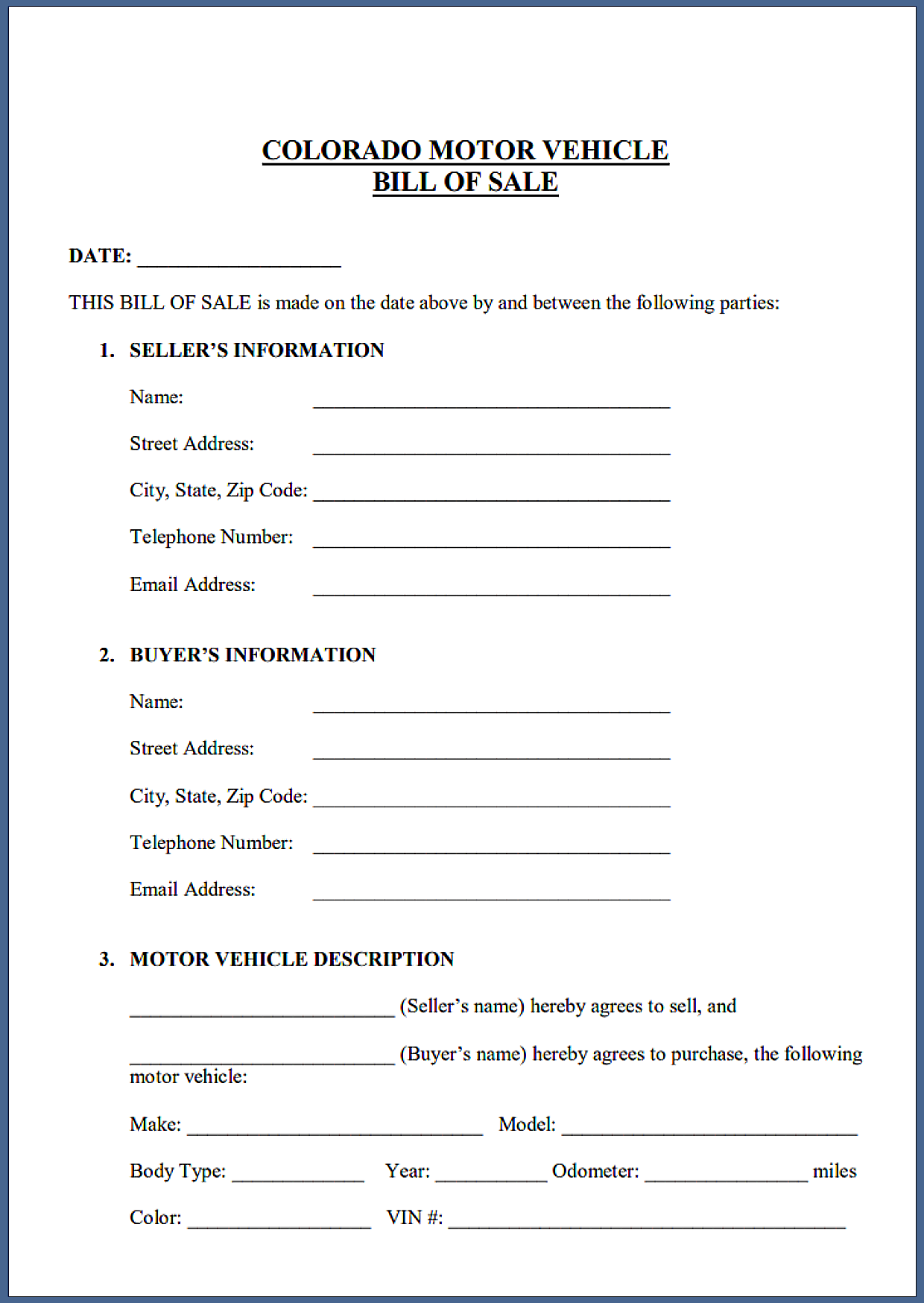
Free Bill Of Sale Colorado Templates
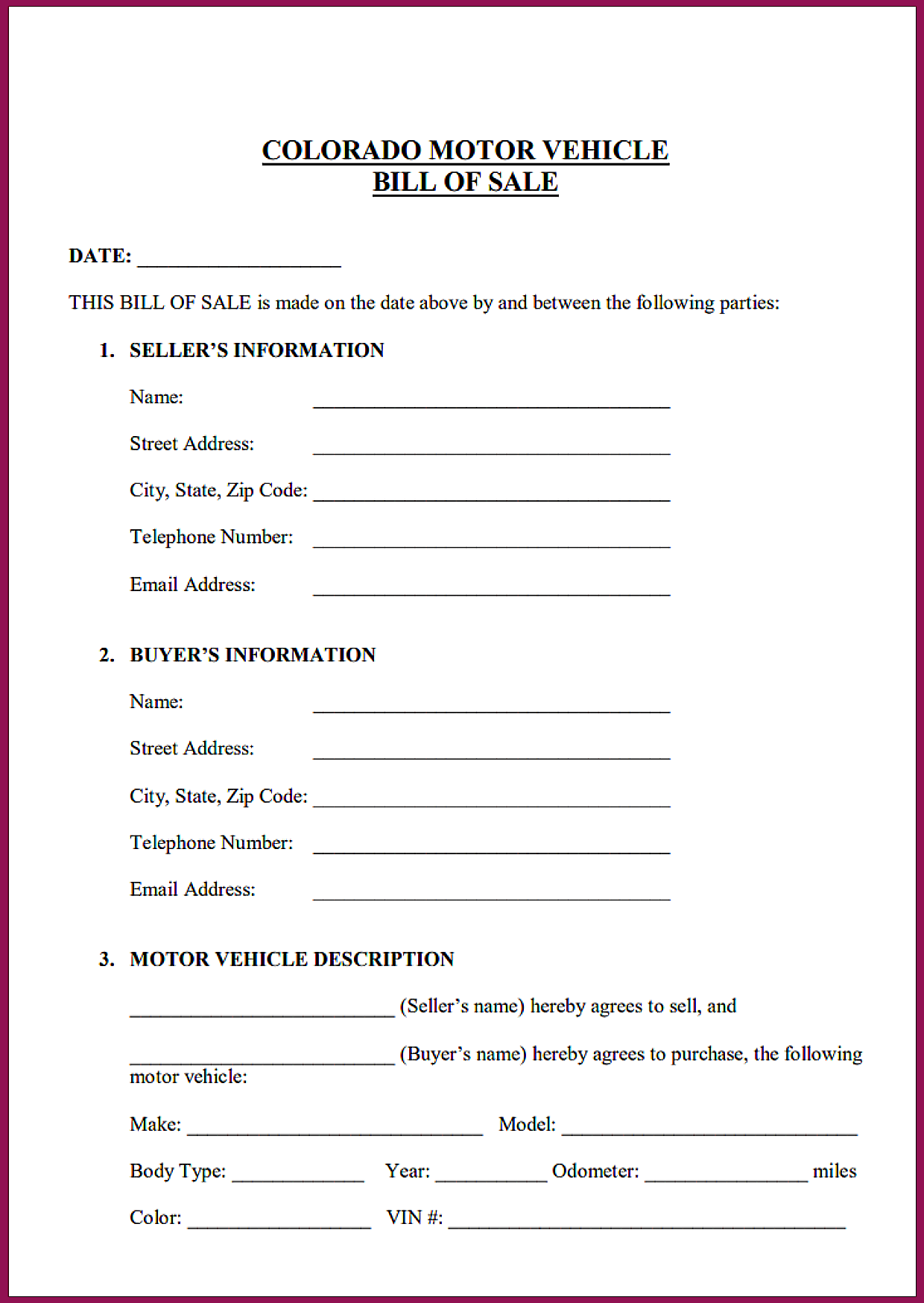
I get asked this all the time—“Can I just download a free Bill Of Sale Colorado template online and use it?” And honestly, yes, you can. I’ve seen plenty of these templates work just fine, especially for simple private sales. Colorado even provides its own version (Form DR 2173), and it’s a good starting point for most people who just want something quick and acceptable for DMV use.
But here’s what I’ve learned after reviewing dozens of these documents—free templates are only as good as how you fill them out. Most problems don’t come from the template itself, they come from missing details, unclear wording, or rushed entries. Personally, I always recommend taking a few extra minutes to double-check everything, because once a dispute starts, that “free template” suddenly becomes very important evidence.
Colorado Vehicle Bill of Sale
When we talk about a Colorado vehicle bill of sale, we’re usually dealing with cars, trucks, or SUVs being sold privately. In my practice, this is where I see the most mistakes—not because it’s complicated, but because people assume the title alone is enough. While the title is critical, the bill of sale adds a layer of protection that many people only appreciate later.
I’ve handled cases where the exact sale date on the bill of sale helped a client avoid fines or liability. Without it, things get messy fast. So even though Colorado doesn’t always require it, I strongly prefer having a properly written vehicle bill of sale every single time.
Colorado Motor Vehicle Bill of Sale
This is essentially the formal version of a Motor vehicle bill of sale, and it’s what most people mean when they refer to the official document used with the DMV. Colorado’s DR 2173 form falls into this category, and I’ve used it in countless transactions because it keeps things clean and standardized.
What I like about using a proper motor vehicle bill of sale is that it removes ambiguity. In legal disputes, clarity wins. When everything—from VIN to price—is clearly written, it becomes much harder for either side to argue later. That’s something I always keep in mind when advising clients.
Automobile Bill of Sale Colorado
“Automobile” might sound formal, but in practice, it’s just another way of saying car. Still, I’ve noticed that when people use more formal documents labeled this way, they tend to take the process more seriously—and that’s actually a good thing.
From my experience, the more structured the document, the fewer the problems later. I always tell clients: it’s not about the name of the form, it’s about the details inside it. A well-written automobile bill of sale can save you from unnecessary stress down the road.
Car Bill of Sale Colorado
This is the most common type I deal with—simple, private car sales between individuals. And honestly, this is also where people tend to cut corners the most. They’ll write something quick, sign it, and assume everything is done.
But I’ve seen small mistakes here turn into big issues. Missing VIN digits, unclear payment terms, or no mention of “as-is”—these things matter. Personally, I always recommend keeping it simple, but never careless.
Colorado DMV Bill of Sale
When people say “DMV bill of sale,” they’re usually referring to the version that will actually be accepted without questions at a Colorado DMV office. And trust me, DMV rejection is something you want to avoid—it wastes time and creates frustration.
In my experience, using the state-recommended format or closely following it is the safest route. The DMV cares about accuracy, not creativity. If your document is clear, complete, and matches their expectations, your process becomes much smoother.
Trailer Bill of Sale Colorado
Trailer sales are interesting because people often underestimate them. They think, “It’s just a trailer,” and skip proper documentation. I’ve seen that lead to ownership confusion, especially when trailers don’t always have the same level of registration clarity as cars.
I always advise treating a trailer sale just as seriously as a vehicle sale. Include full details, confirm identification numbers, and document the transaction clearly. It may seem small now, but it can matter later.
Colorado Boat Bill of Sale
Boat transactions bring their own set of issues, especially when ownership records aren’t as straightforward as vehicles. I’ve dealt with cases where buyers didn’t realize additional registration steps were required after the sale.
A solid bill of sale helps establish clear ownership from day one. In my experience, it’s especially important for boats because disputes can arise over usage, storage, or even shared ownership misunderstandings.
Motorcycle Bill of Sale Colorado
Motorcycle sales are usually quick, informal, and often done between individuals who just want to “get it done.” That’s exactly why I see problems here. The faster the deal, the more likely something important gets missed.
I always recommend slowing down just enough to document everything properly. A motorcycle bill of sale should be just as detailed as a car sale—same rules, same risks, same need for clarity.
Auto Bill of Sale Colorado
“Auto” is just another general term, but the legal importance doesn’t change. Whether it’s a car, truck, or SUV, the purpose of the document remains the same—clear proof of transfer.
From what I’ve seen, consistency matters more than terminology. As long as your document is complete, accurate, and signed properly, it will serve its purpose when you need it most.
Blank Bill of Sale Colorado
A blank bill of sale can be helpful if you want flexibility, but it also comes with risk. I’ve reviewed many blank forms that were filled out incorrectly simply because people weren’t sure what to include.
If you’re using one, my advice is simple—don’t guess. Make sure you include all essential details. A blank form gives freedom, but it also puts responsibility entirely on you.
Simple Bill of Sale Colorado
I understand why people prefer simple documents. Not everyone wants to deal with legal-looking paperwork. And honestly, a simple bill of sale can work perfectly well.
But simple should never mean incomplete. In my experience, the best documents are the ones that are easy to read but still cover all critical information. That balance is what you should aim for.
Sample Bill of Sale Colorado
Samples are useful because they show you what a proper document should look like. I often tell clients to review a sample before drafting their own—it helps avoid common mistakes.
That said, don’t copy blindly. Every transaction is slightly different, and your document should reflect your specific deal. A sample is a guide, not a one-size-fits-all solution.
Bill of Sale for Firearm in Colorado
Firearm bill of sale cases require a bit more caution. While private sales are legal under certain conditions, documentation becomes extremely important if questions arise later.
I always advise clients to be extra careful here—record details clearly, verify identities, and understand applicable laws. This is one area where you don’t want to rely on assumptions.
Colorado Private Car Bill of Sale
Private car sales are where most real-world issues happen. No dealerships, no middlemen—just two individuals relying on paperwork and trust.
That’s why I always push for proper documentation. A private car bill of sale protects both sides and creates a clear record of the transaction, which can be crucial if anything goes wrong later.
Colorado Bill of Sale Form
The official Colorado bill of sale form is designed to make things easier, and in my experience, it usually does. It includes all the necessary fields and aligns with DMV expectations.
Personally, I prefer using the official form whenever possible. It reduces errors, speeds up the process, and gives both parties confidence that everything has been done correctly.
What a Bill of Sale Really Means in Colorado
In my experience, people often think a bill of sale is just a receipt. That’s only half true.
Here in Colorado, it’s proof of a transaction, yes—but it can also become key evidence if something goes sideways later. I’ve seen it used in disputes over ownership, payment disagreements, and even in cases where someone tried to dodge responsibility after selling a vehicle.
What I’ve learned is this:
A good bill of sale protects both sides, not just the buyer.
Is a Bill of Sale Required in Colorado?
This is where things get a little nuanced.
For most private vehicle sales in Colorado, a bill of sale is not strictly required by law if you have a properly assigned title. But—and this is a big but—I always recommend having one.
Why? Because I’ve seen situations like this:
A seller transfers the title but forgets to remove their plates. The buyer racks up parking tickets. Suddenly, the seller is getting notices in the mail.
At that point, the bill of sale becomes your best friend. It shows exactly when the vehicle changed hands.
Personally, I don’t let my clients leave a sale without one. It’s just not worth the risk.
What Colorado Expects in a Proper Bill of Sale
Now, let’s talk about what actually needs to be in it. Not the textbook version—the real-world version that holds up when things get messy.
At a minimum, I always make sure it includes:
-
Full legal names of both buyer and seller
-
Date of the sale (be precise—this matters more than people think)
-
Vehicle details (year, make, model, VIN)
-
Purchase price
-
Signatures from both parties
Colorado even has a standard form—Form DR 2173 (Motor Vehicle Bill of Sale). I’ve used it plenty of times. It’s straightforward and DMV-friendly.
That said, I’ll be honest—I often go a step further and add a simple line like:
“Vehicle sold as-is with no warranties.”
That one sentence has saved my clients from arguments more times than I can count.
The “As-Is” Issue (Where People Get Burned)
This is one of the biggest mistakes I see.
Someone buys a used car, and a week later the engine fails. Then they call me asking if they can “undo the deal.”
Most of the time, the answer is no—especially if the sale was clearly as-is.
From the seller’s side, I strongly prefer putting that in writing. From the buyer’s side, I always say:
If it’s not written, don’t assume it exists.
Title Transfer Still Matters More
Let me be very clear about this:
A bill of sale does not replace the title.
If you leave a deal with just a bill of sale and no properly signed title, you’re asking for trouble. I’ve handled cases where buyers couldn’t register their vehicle because of title issues—and the seller had disappeared.
In Colorado, the title is king. The bill of sale is your backup.
A Situation I See All the Time
Here’s a scenario that comes up more often than you’d think:
A college student in Fort Collins buys a car off Facebook Marketplace. The seller says, “Don’t worry about the bill of sale—we’re good.”
Two months later, the student tries to register the car and hits a wall—missing paperwork, unclear ownership history.
Now they’re scrambling, calling the seller, who suddenly isn’t answering.
If they had a proper bill of sale? That situation becomes much easier to fix.
Practical Tips I Give Every Client
When I’m advising someone on a private sale, I keep it simple:
-
Don’t rush the paperwork—this is where mistakes happen
-
Double-check the VIN (I’ve seen one wrong digit cause weeks of delay)
-
Keep a copy—both parties should walk away with one
-
Use the Colorado form if you’re unsure
-
Write clearly—illegible documents create real problems later
And one more thing I always say:
If something feels off during the deal, pause. You’re allowed to slow it down.
A Quick Legal Note (Just Between Us)
I’ll say this the same way I say it in my office—this is general guidance based on Colorado law and my experience handling these cases. Every situation can be a little different.
If you’re dealing with something complicated—like a title dispute or missing paperwork—it’s worth getting proper legal advice before things escalate.
Final Thoughts
If there’s one thing I’ve learned after years of dealing with vehicle sales in Colorado, it’s this:
Most problems don’t come from bad intentions—they come from rushed paperwork and assumptions.
A solid bill of sale is one of the easiest ways to protect yourself, and yet it’s the thing people skip the most.
Personally, I’d rather spend 10 extra minutes writing a proper document than spend weeks cleaning up a legal mess later.
FAQs
Is a Bill Of Sale required in Colorado?
In most cases, no—it’s not legally required if you have a properly signed title. But in my experience, skipping it is a mistake. I’ve seen people run into trouble with the DMV or even liability issues later, and a bill of sale could’ve easily prevented that. Personally, I always recommend having one, even if the law doesn’t strictly demand it.
Does a Bill Of Sale need to be notarized in Colorado?
No, Colorado generally does not require a bill of sale to be notarized. That said, I’ve had clients choose to notarize it anyway for extra peace of mind, especially in higher-value transactions. It’s not mandatory, but it can add an extra layer of credibility if there’s ever a dispute.
Can I write my own Bill Of Sale, or do I have to use a state form?
You can absolutely write your own—I’ve seen handwritten ones hold up just fine when done correctly. But I’ll be honest, I strongly prefer using the Colorado Form DR 2173 or a structured template. It reduces mistakes and makes things smoother at the DMV, which is something most people appreciate later.
What happens if I don’t have a Bill Of Sale?
If everything else is perfect—especially the title—you might be okay. But if anything goes wrong, not having a bill of sale can make things much harder. I’ve handled cases where people couldn’t prove when a vehicle was sold, and that created real problems. It’s one of those documents you don’t think about—until you really need it.