Over the years practicing law here in Colorado, I’ve helped many people handle vehicle transfers, private car sales, title issues, and the paperwork that comes with them. One document that shows up again and again in these situations is the Colorado Bill of Sale Form. Simply put, it’s a written record that proves a vehicle or property was sold from one person to another — something the Colorado DMV often relies on when questions about ownership or price come up.
Now, in real life, most private sales here in Colorado don’t happen in fancy offices. They happen between neighbors, coworkers, friends, and sometimes complete strangers meeting in a grocery store parking lot. Someone hands over the keys, the buyer hands over the cash, and they quickly write down the details of the deal. Most of the time, everything works out fine. But every now and then someone walks into my office holding a crumpled receipt and says, “John… the DMV says this isn’t enough.”
That’s usually when the conversation about a proper Colorado Bill of Sale begins.
I’ve helped people fix missing paperwork, deal with title disputes, and untangle situations where a vehicle changed hands but the legal trail didn’t quite keep up. And in many of those cases, a simple, properly written bill of sale could have prevented a lot of headaches.
So let me walk you through how this works here in Colorado — the same way I usually explain it to someone sitting across the desk in my office.
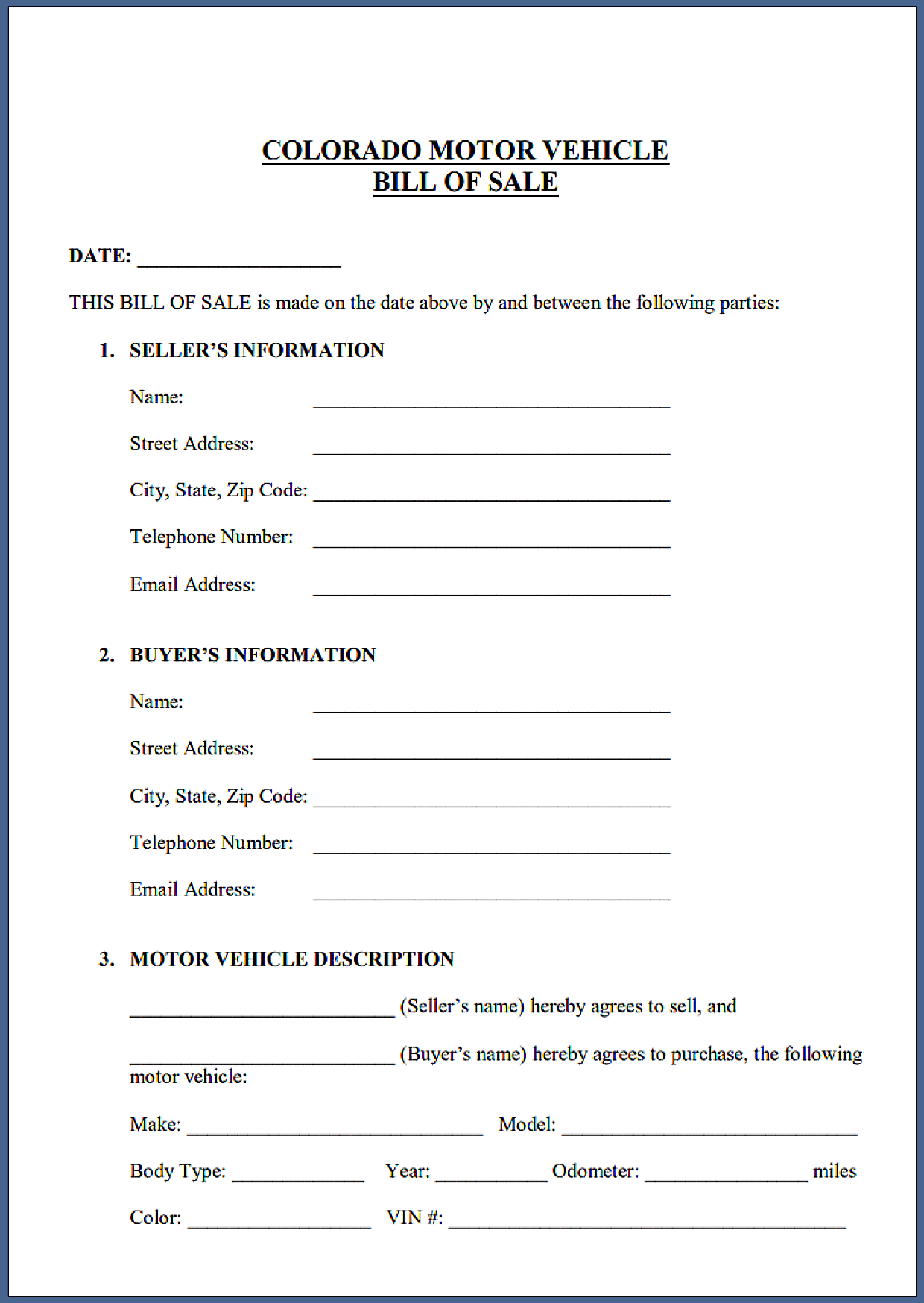
Free Printable Colorado Bill of Sale Form Template
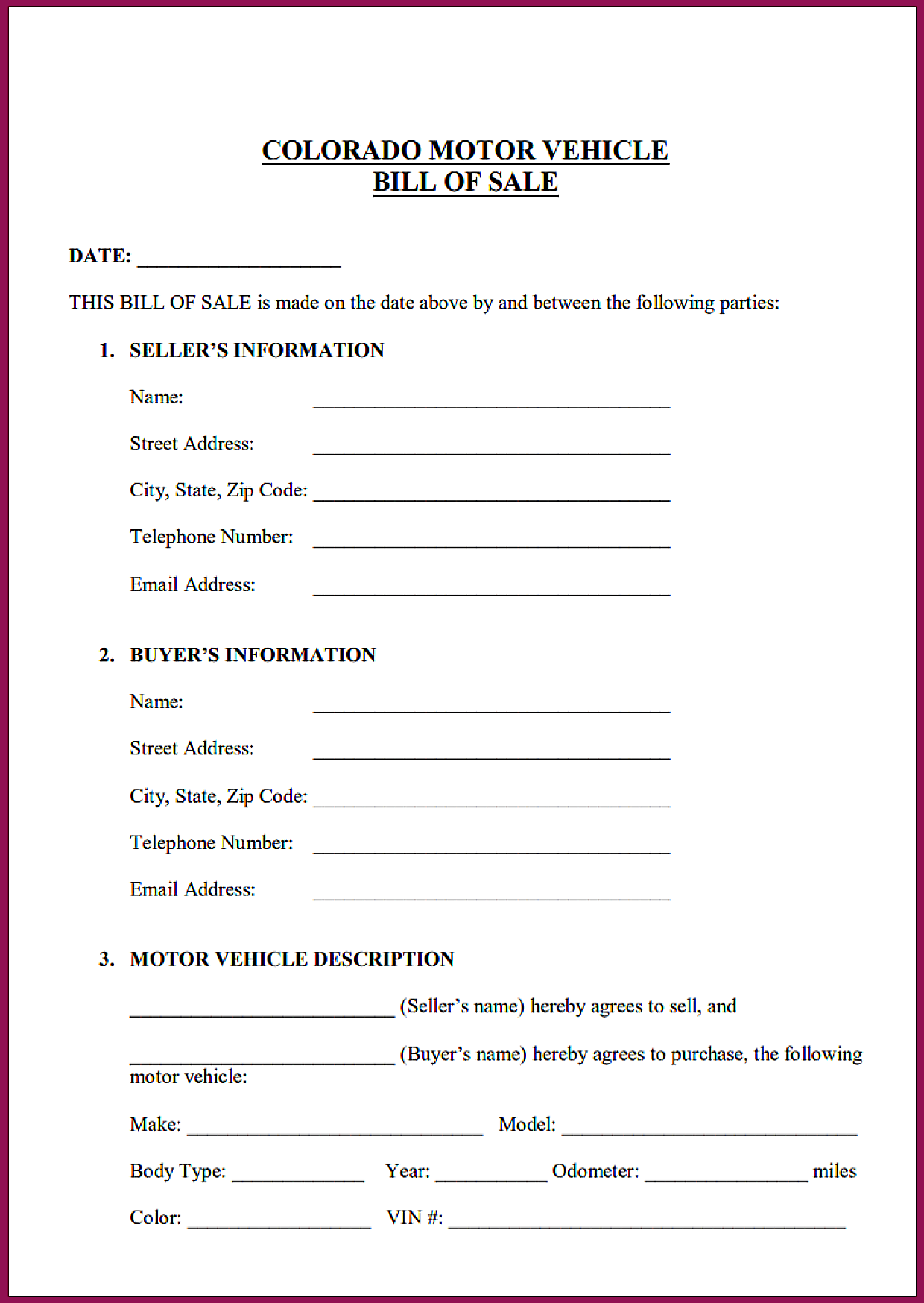
Over the years, plenty of people have walked into my office asking for a simple bill of sale template they can use without overcomplicating things. In Colorado, most private sales between individuals don’t involve lawyers or formal contracts. It’s usually two people agreeing on a deal and writing it down so there’s a clear record of the transaction. A free printable Colorado bill of sale form template helps with exactly that — it gives you a straightforward document where you can record the buyer, seller, item details, sale price, and the date of the transfer. In my experience, having this written proof can prevent misunderstandings later, especially if questions about ownership or payment ever come up.
I always tell clients that even when the law doesn’t strictly require a bill of sale for certain transactions, having one is simply smart practice. It protects both the buyer and the seller and creates a clear timeline if any dispute arises down the road. For convenience, I’ve also included the PDF format of this free printable Colorado Bill of Sale Form Template, so you can download it, print it, and use it right away for your transaction.
Colorado Vehicle Bill of Sale Form
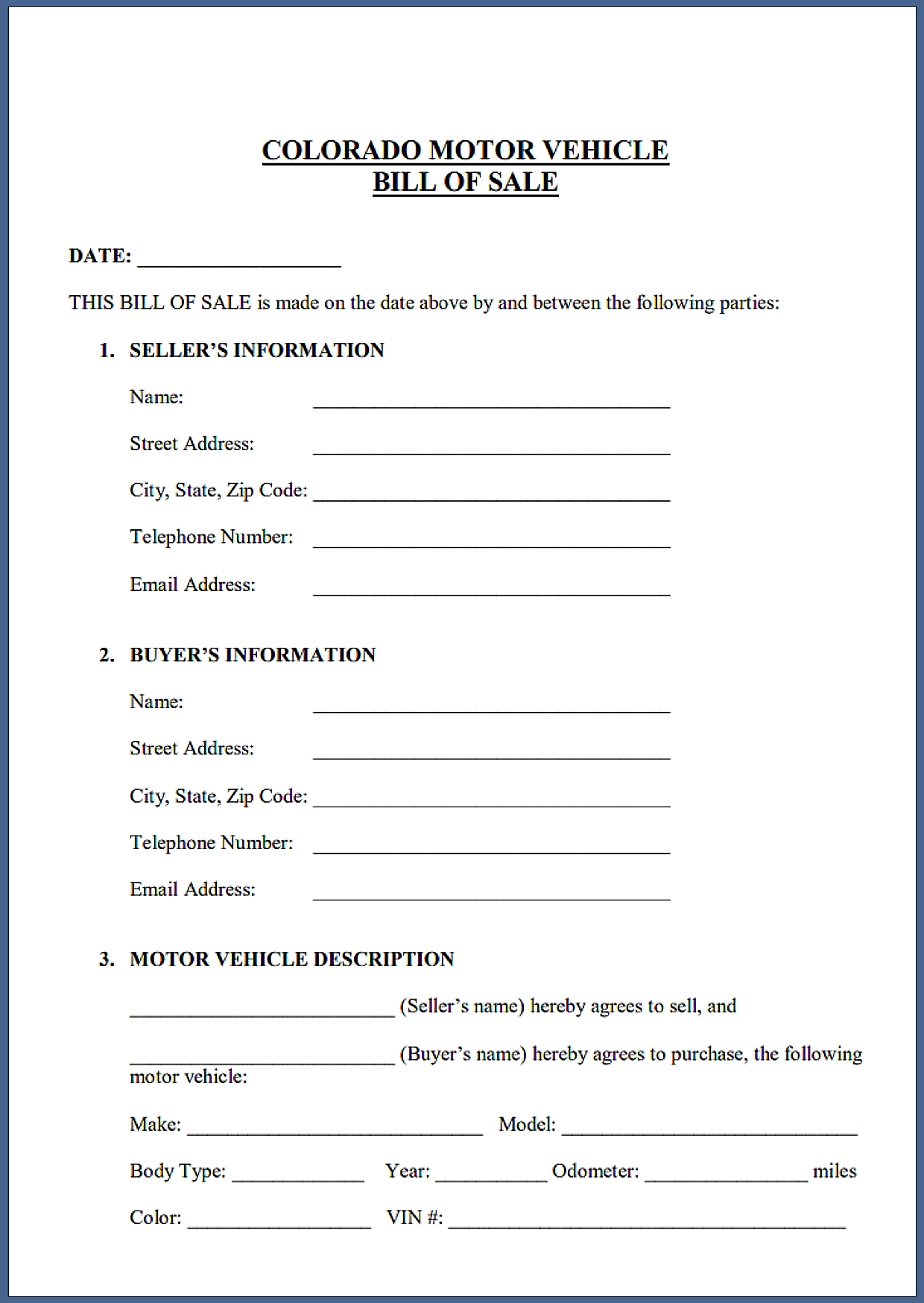
When someone sells or buys a vehicle privately here in Colorado, one of the most common questions I hear is whether a vehicle bill of sale is necessary. While the vehicle title handles the official ownership transfer through the DMV, a Colorado Vehicle Bill of Sale Form acts as an important supporting document. It records key details about the transaction — including the vehicle’s VIN, make, model, purchase price, and the identities of the buyer and seller. From my experience handling DMV issues and vehicle transfer disputes, this document can be extremely helpful if any confusion about the sale arises later.
Personally, I always recommend completing a bill of sale whenever a vehicle changes hands, even if the buyer is a friend or family member. It provides written proof of the agreement and can help both parties avoid problems with taxes, registration, or ownership verification. To make things easier, I’ve also included the PDF format of the Colorado Vehicle Bill of Sale Form, which you can download and print for your records or use during your vehicle sale.
Auto Bill of Sale Form Colorado
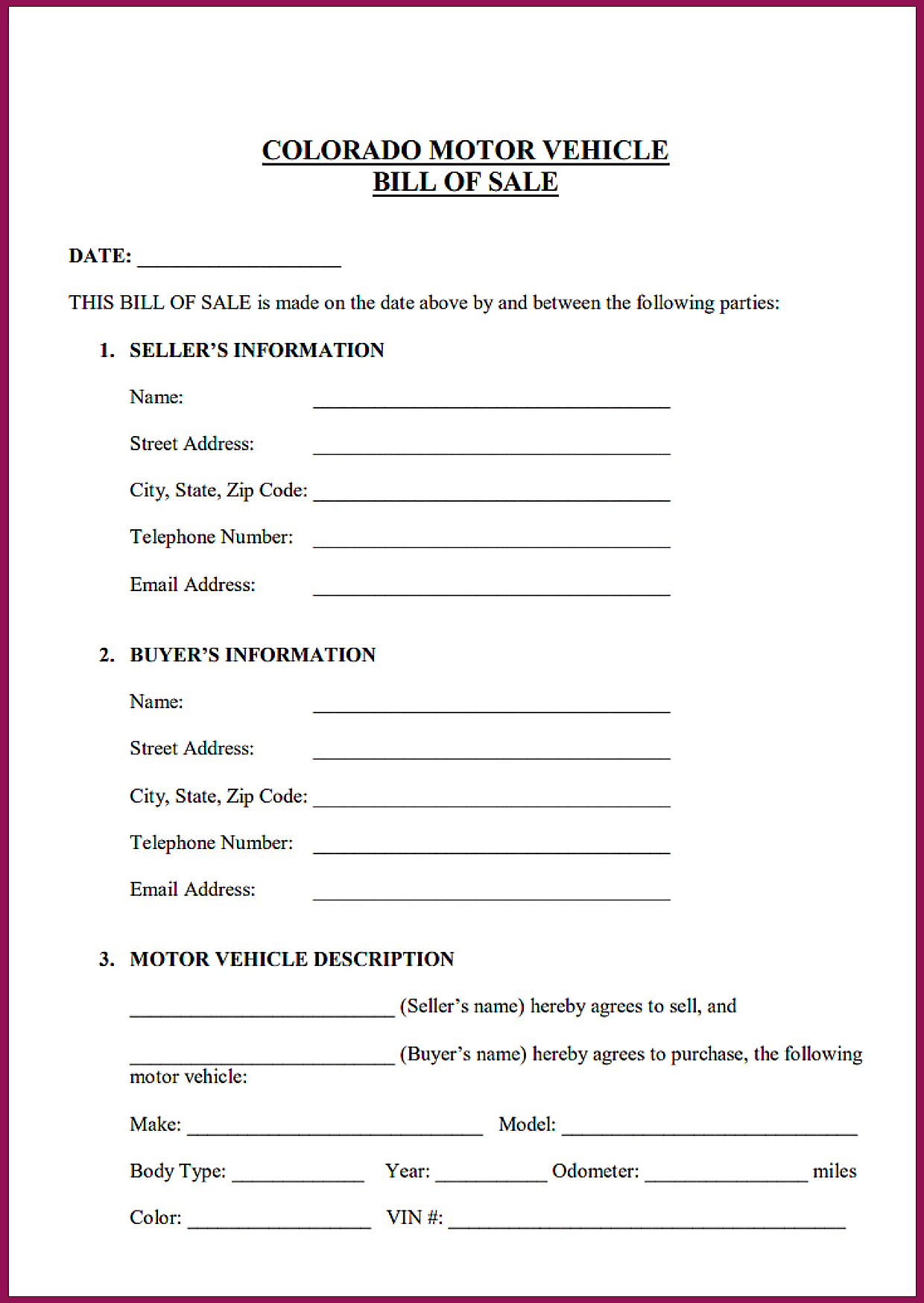
In everyday conversations, people often use the terms “vehicle” and “auto” interchangeably, and the same applies to the paperwork used for private sales. An Auto Bill of Sale Form in Colorado serves as a written record confirming that a car has been sold from one person to another. Over the years, I’ve seen many situations where buyers and sellers relied only on a handshake agreement. While that might feel comfortable at the moment, it can create complications later if ownership, payment, or vehicle condition becomes a point of dispute.
That’s why I always suggest documenting the transaction clearly. A properly filled auto bill of sale includes the names and addresses of both parties, the vehicle details, the agreed purchase price, and signatures confirming the deal. This small step can provide valuable protection for everyone involved. For convenience, I’ve also provided the PDF format of the Auto Bill of Sale Form Colorado, so you can download it and print it whenever you need a quick and reliable document for a private vehicle sale.
Firearm Bill of Sale Form Colorado
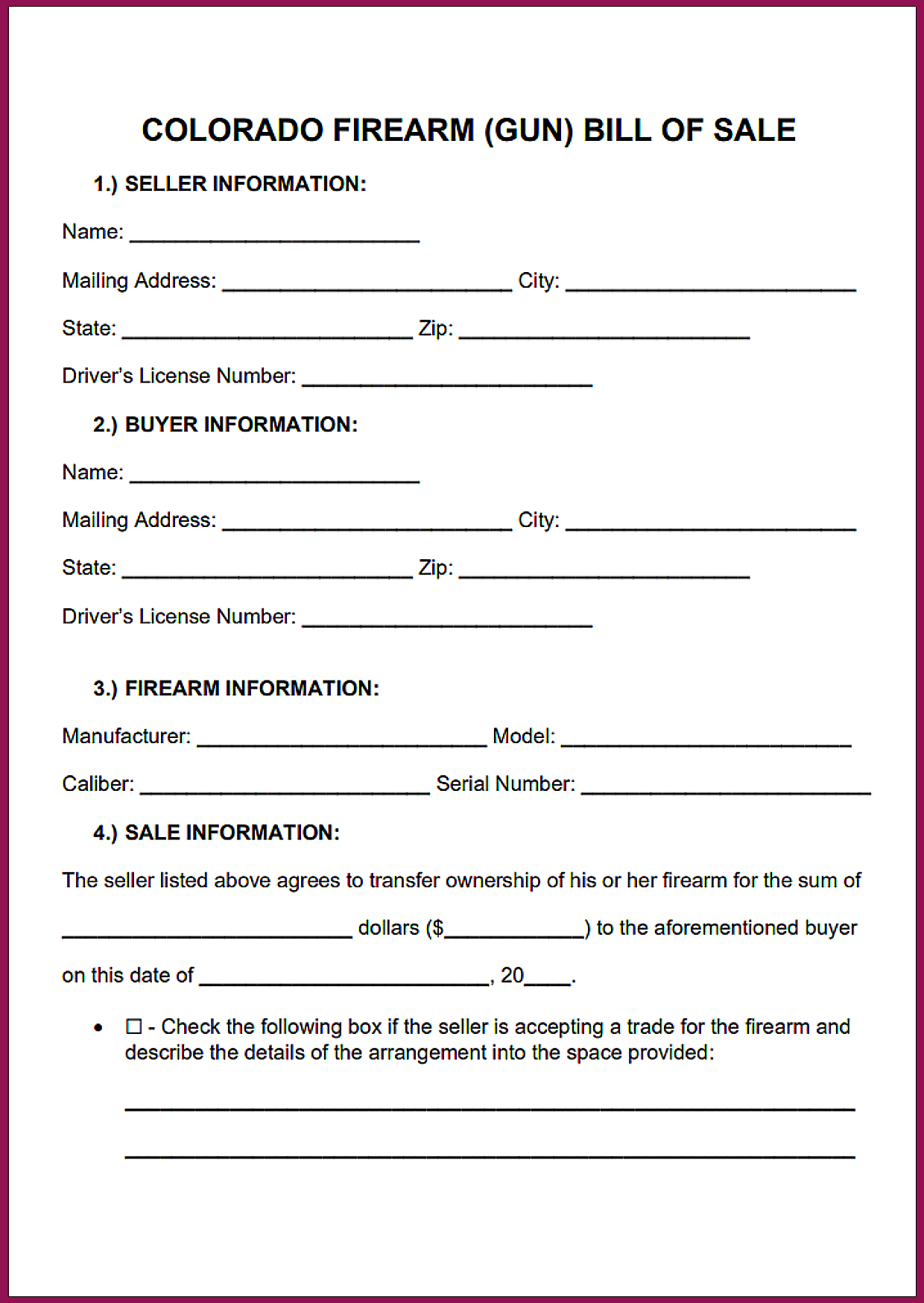
Firearm transactions can raise more questions than many other private sales, especially when it comes to documentation. In Colorado, private firearm sales must follow certain legal requirements, and while the background check process is handled through licensed dealers, many people still prefer to keep a Firearm Bill of Sale as a personal record of the transfer. From my perspective as a lawyer, having written documentation of when and how a firearm changed ownership can be extremely useful if questions ever arise about possession or responsibility.
A Firearm Bill of Sale Form in Colorado typically includes the buyer and seller information, firearm details such as make, model, and serial number, and the date of the transfer. It serves as a clear record showing that the firearm was legally transferred between the parties involved. To make things easier for readers, I’ve also included the PDF format of the Firearm Bill of Sale Form Colorado, which you can download and print for your records whenever you need it.
Why I Always Recommend a Vessel Bill of Sale in Colorado
Technically speaking, Colorado doesn’t always require a bill of sale for every vessel transfer. But personally, I almost always recommend having one anyway.
Here’s why.
In my legal work, I’ve seen situations where the boat title alone didn’t tell the full story. Maybe the seller forgot to list the purchase price. Maybe the buyer claimed they paid less than they actually did. Maybe the transaction date was disputed.
A simple bill of sale clears all that up immediately.
It creates a written record showing:
-
Who sold the vessel
-
Who bought it
-
When the transfer happened
-
The agreed purchase price
-
Details about the boat itself
If a dispute ever lands in front of a DMV clerk, a county office, or even a courtroom, that document becomes incredibly valuable.
Think of it as the paper trail that backs up your handshake.
What Information Should Be Included
Over the years I’ve reviewed hundreds of these documents, and the strongest ones always include the same basic information.
If you were sitting across my desk asking what to include, I’d tell you to make sure the bill of sale clearly lists:
-
Full legal names of the buyer and seller
-
Addresses of both parties
-
The date of the sale
-
Purchase price
-
Vessel make, model, and year
-
Hull Identification Number (HIN)
-
Any included trailer or motor details
-
Signatures of both buyer and seller
I also strongly prefer when people include a short line stating the boat is being sold “as-is” unless another agreement exists.
That one phrase alone has prevented a lot of headaches in cases I’ve seen.
Colorado Registration and Title Considerations
One thing people often don’t realize is that Colorado handles boat ownership through Colorado Parks & Wildlife, not the DMV like vehicles.
That surprises folks all the time.
If you buy a vessel here, the new owner must usually register the boat with Colorado Parks and Wildlife (CPW). Depending on the boat, you may also deal with title documentation for trailers through the DMV.
In practice, what I’ve seen is this:
-
Boats themselves require CPW registration
-
Trailers usually require Colorado DMV title transfer
And that’s exactly where documentation becomes important. A clean bill of sale helps both agencies verify the ownership transfer.
A Situation I’ve Seen More Than Once
Let me share a quick scenario that happens more often than you’d think.
A buyer purchases a used boat from a private seller on Craigslist. They pay cash, receive the boat, and assume everything is fine. But the seller forgets to properly sign the title or fill out key information.
Months later the buyer tries to register the vessel with Colorado Parks & Wildlife.
Now there’s a problem.
The ownership chain isn’t clear.
At that point, the buyer often ends up searching for the previous owner again — which can be difficult or impossible.
A proper bill of sale signed at the time of purchase could have solved that instantly.
That’s exactly why I always encourage clients to slow down for ten minutes and document the sale correctly.
Should You Notarize a Colorado Vessel Bill of Sale?
People ask me this question constantly.
Legally speaking, notarization is not always required for a vessel bill of sale in Colorado. But in my professional opinion, it’s often a smart extra step.
Why?
Because a notarized document makes it harder for someone later to claim:
-
“That’s not my signature.”
-
“I didn’t sell that boat.”
-
“The document was altered.”
I’ve seen disputes where notarization would have ended the argument instantly.
So while it’s not mandatory, I personally consider it good legal hygiene.
Common Mistakes I See in Private Boat Sales
After years dealing with these transactions, certain patterns show up again and again.
Some of the most common problems include:
-
Missing Hull Identification Numbers
-
Incorrect vessel descriptions
-
No sale date listed
-
Buyers relying only on text messages or verbal agreements
-
Sellers forgetting to keep a copy
Honestly, many of these issues come from people simply trying to keep things casual. I understand the instinct — especially when you’re buying from a neighbor or friend.
But when paperwork is missing, even friendly transactions can turn complicated.
My Practical Advice for Buyers and Sellers
If you were sitting in my office asking for simple guidance, here’s what I’d tell you.
Take a few minutes and create a clear written bill of sale before money changes hands.
Both parties should sign it.
Each person keeps a copy.
Personally, I also recommend snapping a photo of the signed document and storing it digitally. That little step has saved people a lot of stress when paperwork gets misplaced.
And if the boat includes a trailer, don’t forget that the trailer transfer may involve separate DMV documentation.
A Quick Legal Note
Just to be clear — this article is based on my professional experience handling Colorado sales and ownership issues, but it’s not formal legal advice for your specific situation. Every case can be a little different.
If something about your boat sale feels unclear, it’s always wise to speak with a qualified attorney or contact Colorado Parks & Wildlife directly.
Final Thoughts
What I’ve learned over the years is that most legal problems in private sales don’t come from bad intentions — they come from missing paperwork.
A Colorado Vessel Bill of Sale is a simple document, but it provides clarity, protection, and peace of mind for both sides.
Personally, I’d never buy or sell a boat in Colorado without one.
If you have questions about vessel sales, title issues, or registration problems here in Colorado, feel free to reach out. I’m always happy to hear real situations people are dealing with.
And if you’ve gone through a boat sale yourself — smooth or stressful — drop a comment and share your experience. Those real stories help everyone learn.
Leave a Reply