When someone walks into my office here in Colorado with paperwork for a private car sale, one of the first things I ask is simple: “Do you have a Colorado Private Car Bill of Sale?” After years of working as a Colorado attorney handling vehicle transfers, title disputes, and DMV paperwork, I’ve learned that this single document can prevent a surprising number of legal headaches. Simply put, a Colorado Private Car Bill of Sale is a written record of a private vehicle transaction that confirms who sold the car, who bought it, when the sale happened, and how much was paid.
You’d be surprised how often the answer is no.
Over the years, I’ve handled cases involving title problems, DMV confusion, and even situations where a seller kept receiving parking tickets months after the car had already been sold. In many of those situations, the issue could have been avoided with a properly written bill of sale documenting the transaction.
From my experience working with Colorado vehicle laws and county DMV offices, this small piece of paperwork often becomes the difference between a smooth transfer and a frustrating legal mess. So let me walk you through how a Colorado private car bill of sale actually works in the real world here in Colorado — the way I explain it to clients sitting across the desk in my office.
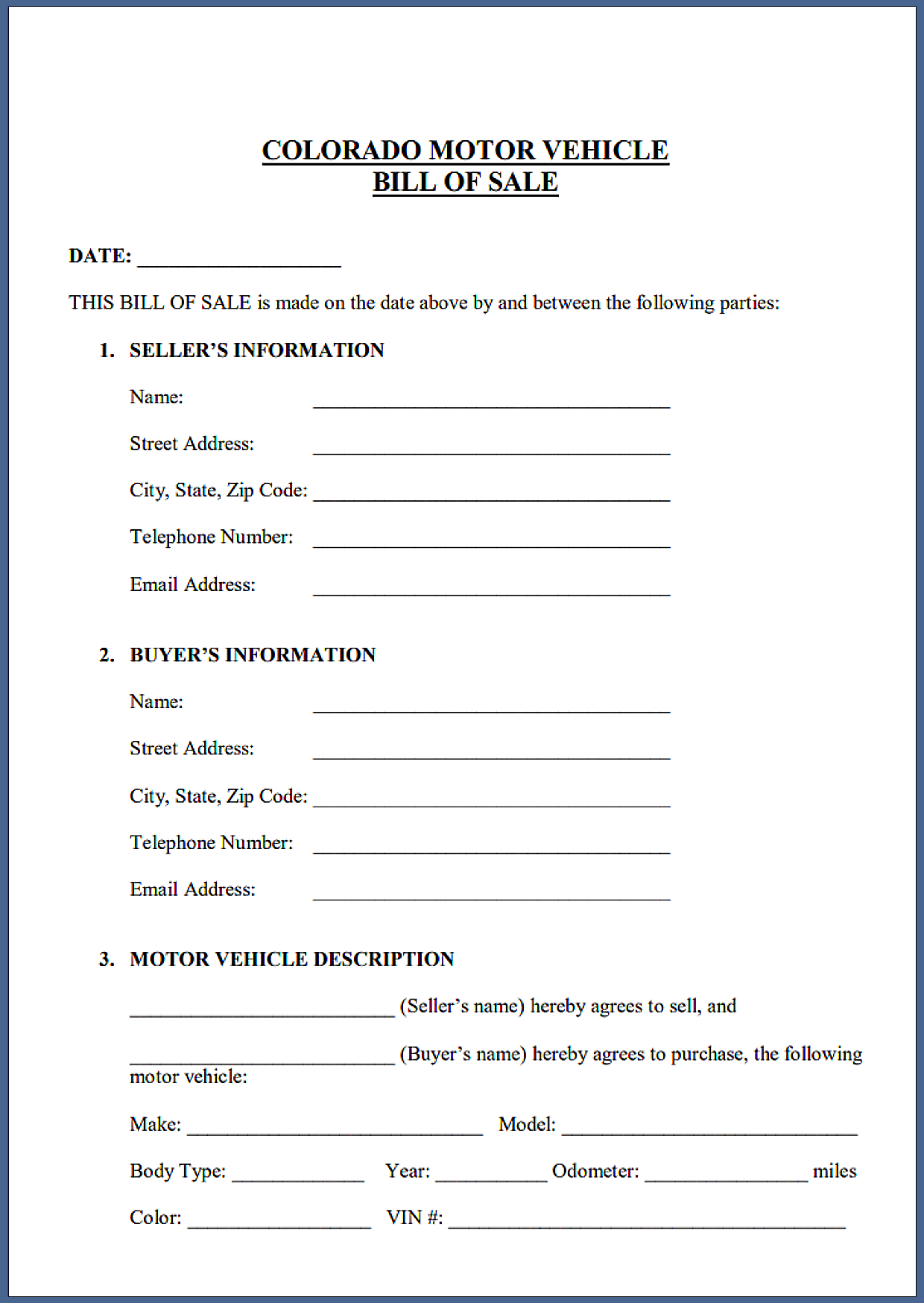
Free Printable Colorado Private Car Bill of Sale Template
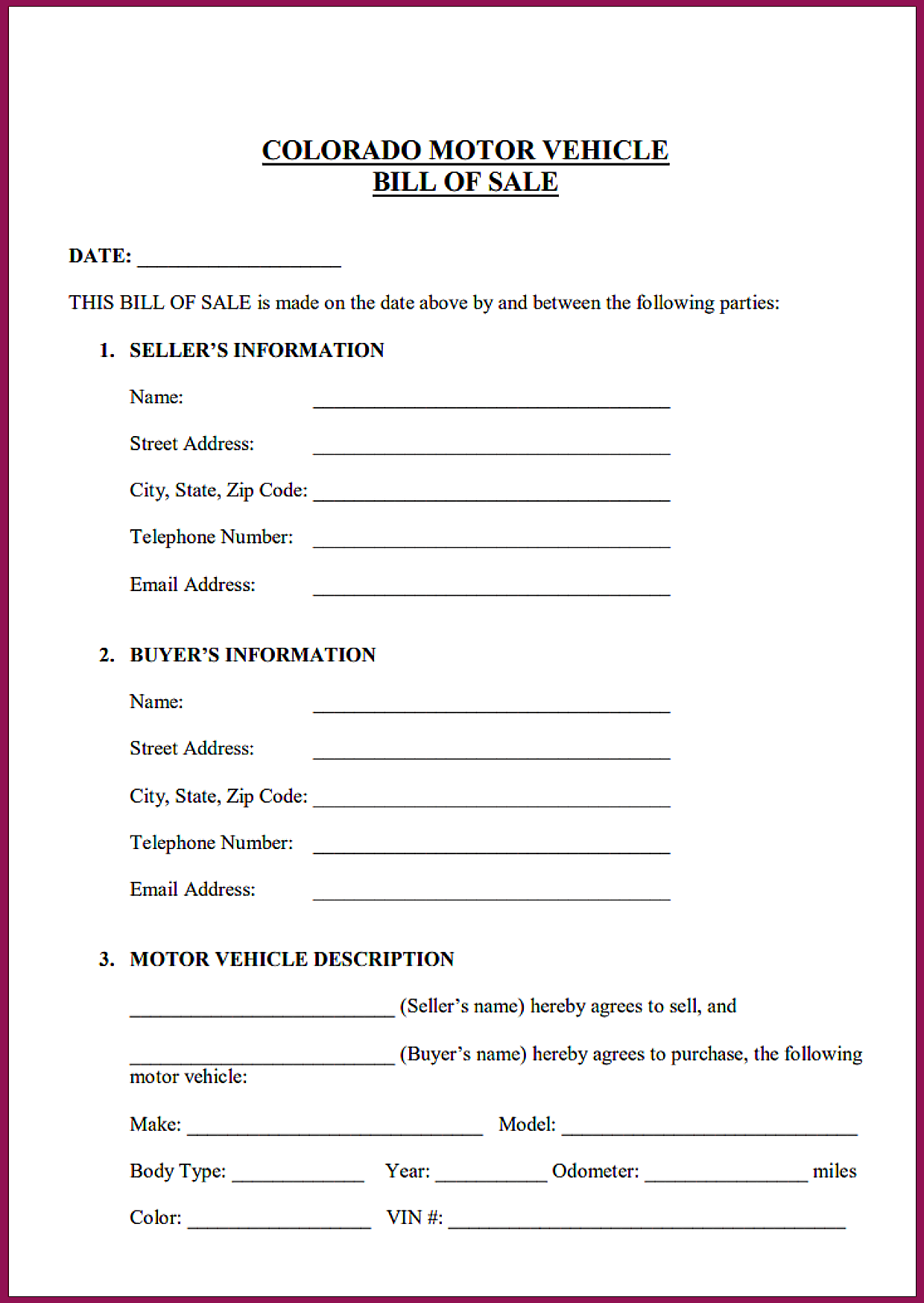
Over the years, I’ve noticed that many people selling a car privately in Colorado just want something simple they can print, fill out, and sign without worrying about complicated legal wording. That’s exactly where a free printable Colorado private car bill of sale template becomes useful. In my legal practice, I’ve seen buyers and sellers walk into my office with handwritten agreements on scrap paper, and while those can sometimes work, they often miss important details that protect both parties. A properly structured printable template helps make sure the vehicle details, VIN, sale price, and both parties’ information are clearly recorded.
From my experience dealing with DMV paperwork and vehicle disputes in Colorado, having a clear written record can make a huge difference if questions come up later about the sale date or ownership transfer. That’s why I usually recommend using a clean, printable format that both parties can keep a copy of. For convenience, I’ve also included the PDF version of this template in this article so you can easily download it and use it when completing your vehicle sale paperwork.
Private Party Vehicle Bill of Sale Colorado
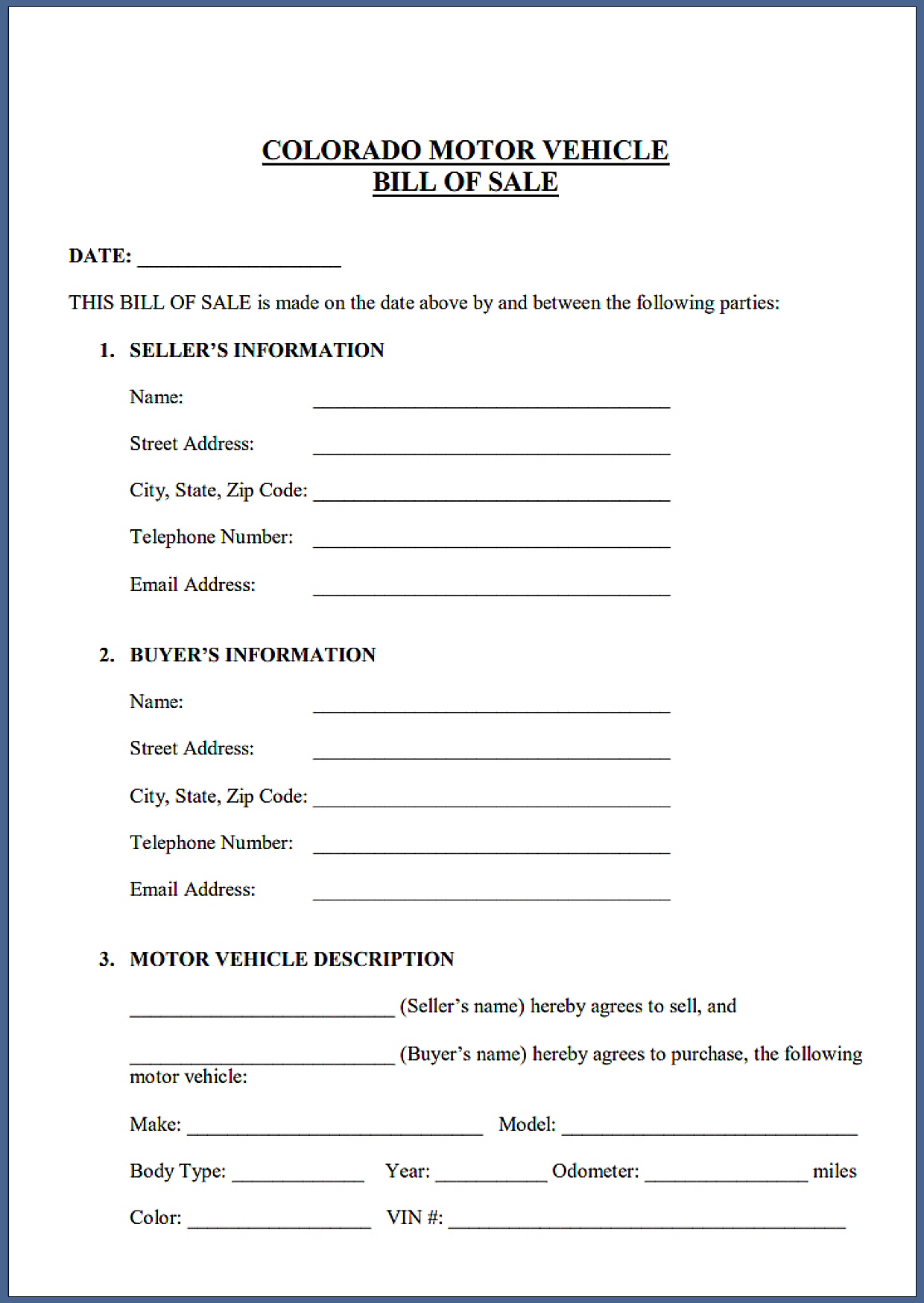
Most vehicle sales I see outside of dealerships here in Colorado are what we call private party sales—one individual selling a car directly to another. In these situations, a private party vehicle bill of sale in Colorado serves as an important written record confirming that the ownership of the vehicle has officially changed hands. Over the years, I’ve had many clients come to me after a private sale went wrong, usually because the details of the agreement were never properly written down.
What I’ve learned from handling these cases is that a simple document listing the vehicle information, buyer and seller details, and the agreed sale price can prevent a lot of confusion later. It also helps support the title transfer process when the buyer visits the county clerk’s office. To make things easier, I’ve also provided a PDF format of this private party bill of sale in this article, which you can download and use for your own Colorado vehicle transaction.
Colorado Auto Bill of Sale Private Owner
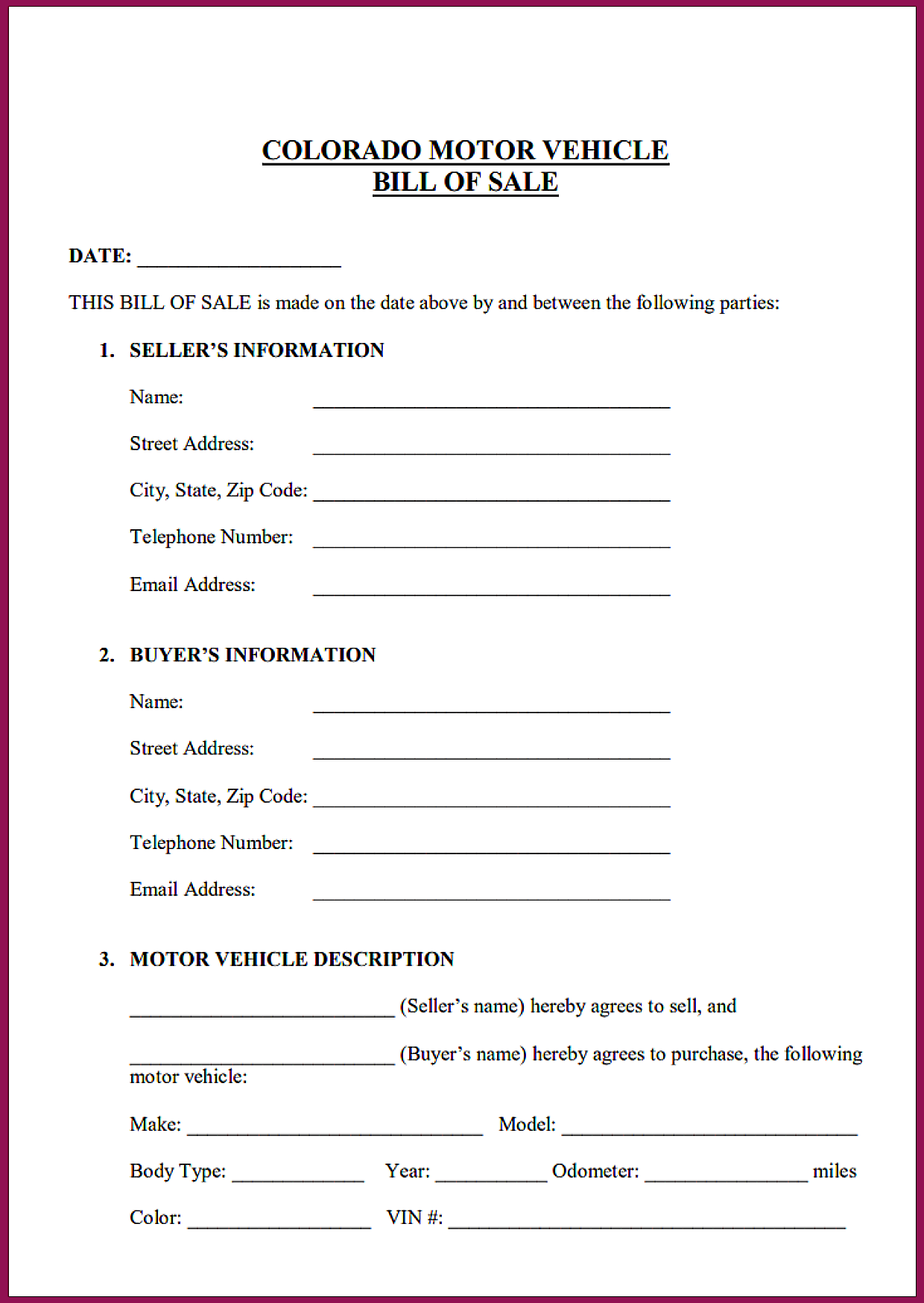
When a vehicle is sold directly by the owner rather than through a dealership, the transaction usually requires a Colorado auto bill of sale for a private owner to document the deal. In my experience working with vehicle paperwork in Colorado, many private sellers assume that signing the title alone is enough. While the title transfer is certainly important, I’ve seen situations where having a bill of sale helped resolve disputes about the sale date, purchase price, or even who actually possessed the vehicle at a certain time.
Because of that, I often suggest that private owners create a clear written bill of sale alongside the title transfer documents. It provides extra protection and creates a simple record of the transaction for both parties. To help make the process easier, I’ve also included a downloadable PDF version of the Colorado auto bill of sale for private owners in this article so you can quickly download it and use it when completing your vehicle sale.
Why I Always Recommend a Bill of Sale in Colorado
Technically speaking, Colorado doesn’t always require a bill of sale for every vehicle transaction if the title transfer is completed correctly. But personally, I always recommend using one, and frankly, most county DMV offices prefer it as well.
Here’s why.
A bill of sale creates a paper trail. It shows the exact moment ownership changed hands — who sold the vehicle, who bought it, and what the agreed price was.
I’ve seen situations where a seller thought the deal was finished, only to receive:
-
Toll violations
-
Parking tickets
-
Even notices from law enforcement
Why? Because the buyer never transferred the title.
When that happens, the seller’s name is still connected to the vehicle in the system. A simple bill of sale can help prove when the vehicle actually left your possession.
I’ve had clients breathe a huge sigh of relief once we pulled out that signed document.
What a Colorado Private Car Bill of Sale Should Include
In my experience, the best bill of sale documents are simple but detailed. Nothing fancy — just clear information that protects both sides.
When I help clients draft one, I always make sure it includes:
Basic vehicle details
-
Vehicle year, make, and model
-
Vehicle Identification Number (VIN)
-
Current odometer reading
Buyer and seller information
-
Full legal names
-
Addresses
-
Signatures
Sale details
-
Purchase price
-
Date of sale
-
Statement that the vehicle is sold “as-is”
That “as-is” language matters more than people realize.
Without it, buyers sometimes come back weeks later saying something broke and expecting the seller to fix it. In private sales, the standard practice in Colorado is that the vehicle is sold as-is unless stated otherwise.
I’ve seen friendships fall apart over that misunderstanding.
Colorado DMV Practices I See All the Time
Working with Colorado vehicle paperwork for years, I’ve noticed a few patterns.
First, every county clerk’s office handles things slightly differently. Denver, El Paso, Jefferson — they all follow state rules, but the process at the counter can feel a little different.
That said, most DMV offices appreciate when a bill of sale is included with the title transfer paperwork. It helps confirm the purchase price for tax purposes.
And yes, the state does care about that.
Colorado calculates vehicle taxes partly based on the sale price, so when people try to put “$1” on a sale just to reduce taxes, it can raise eyebrows.
I usually tell people: just write the real number. It avoids problems later.
A Situation I See More Often Than You’d Think
Let me share a very typical scenario.
A client of mine once sold an older pickup truck through a private Facebook listing. The buyer paid cash, took the keys, and promised to handle the title transfer.
Six months later, my client got a notice about unpaid toll road charges.
Turns out the buyer never transferred the title.
Fortunately, my client had a signed bill of sale with the exact sale date. That document helped show that the truck had been sold long before the violations happened.
Without it, things could have been much messier.
My Personal Advice When Selling a Car Privately
After handling these cases for years, I’ve developed a few habits I strongly recommend.
Personally, I always suggest:
Sign the bill of sale at the same time the title is signed.
Doing everything together avoids confusion.
Keep a copy for yourself.
I’ve seen sellers hand over the only copy — that’s a mistake.
Write the exact date and time of the sale.
That detail can matter if a dispute pops up.
File a release of liability if possible.
Some counties allow notification that the vehicle was sold.
These small steps can prevent huge headaches later.
A Quick Legal Note
Just so we’re clear — what I’m sharing here is general information based on my experience practicing law in Colorado. Every situation can be different, and laws can change. If you’re dealing with a complicated vehicle dispute or title issue, it’s always wise to talk directly with a lawyer or your county clerk’s office.
That said, most private car sales are straightforward when the paperwork is done correctly.
Final Thoughts From My Desk
Over the years, I’ve learned that vehicle sales aren’t really about paperwork — they’re about protecting people from misunderstandings later.
A simple Colorado private car bill of sale might feel like an extra step in the moment, but I’ve seen it save people from serious legal and financial trouble.
If you’re selling or buying a car privately in Colorado, take the extra five minutes and put the details in writing. Trust me, future-you will be glad you did.
And if you’ve got questions about vehicle transfers, title problems, or bill of sale documents here in Colorado, feel free to leave a comment or reach out.
I read every message, and I’m always happy to help where I can.
FAQs
Do I need a bill of sale when selling a car privately in Colorado?
In many cases, the signed vehicle title is the main document required for ownership transfer in Colorado. However, in my experience working with vehicle sales and DMV paperwork, having a bill of sale is strongly recommended. It creates a clear record of the sale date, price, and the parties involved, which can help prevent disputes later.
What information should be included in a Colorado private car bill of sale?
A proper bill of sale should include the vehicle’s year, make, model, VIN, and odometer reading. It should also list the buyer’s and seller’s full names, addresses, the purchase price, the date of the sale, and signatures from both parties. Including an “as-is” statement is also commonly used in private vehicle sales.
Does a Colorado bill of sale need to be notarized?
Typically, a standard private car bill of sale in Colorado does not require notarization. However, some buyers and sellers choose to have the document notarized for extra legal assurance. Requirements can sometimes vary depending on the county or the specific circumstances of the transaction.
Can I use a printable or PDF bill of sale template in Colorado?
Yes. Many people use printable or PDF bill of sale templates when completing private vehicle sales. As long as the document includes accurate vehicle information, buyer and seller details, and signatures, it can serve as a valid written record of the transaction.
Leave a Reply