I’ve spent many years working as a lawyer here in Colorado, helping people with vehicle sales, title transfers, and the kind of paperwork that usually only becomes important when something goes wrong. One document that comes up again and again in my office is the Blank Bill of Sale Colorado form. In simple terms, a bill of sale is a written record that proves ownership of a vehicle or other property has officially been transferred from one person to another.
But here’s the thing I see all the time. Someone walks into my office holding a small handwritten note that says something like, “Sold my truck to Mike for $2,000 — thanks.” They look at me and ask, “That’s a bill of sale, right?”
Well… sometimes yes. Sometimes not. And sometimes that little piece of paper ends up causing more problems than it solves.
After years of dealing with vehicle transfers, title disputes, and DMV issues across Colorado, I’ve learned that a proper bill of sale—even a simple blank one filled out correctly—can save people a lot of stress later on. What seems like a small document today can become extremely important if questions ever come up about ownership, taxes, or liability.
So let me walk you through how a Blank Bill of Sale Colorado actually works, what the state expects to see on it, and a few mistakes I’ve seen people make that are very easy to avoid.
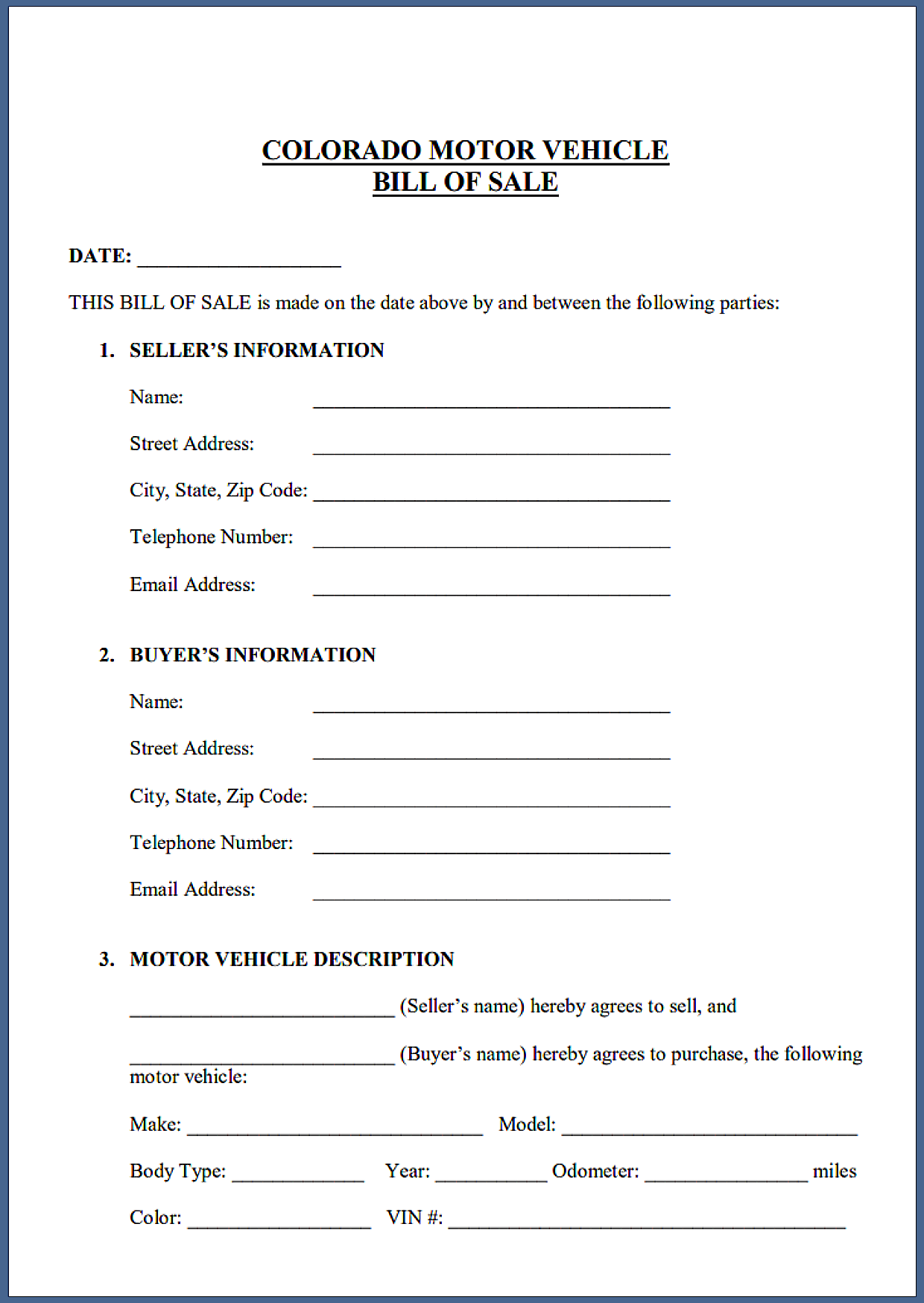
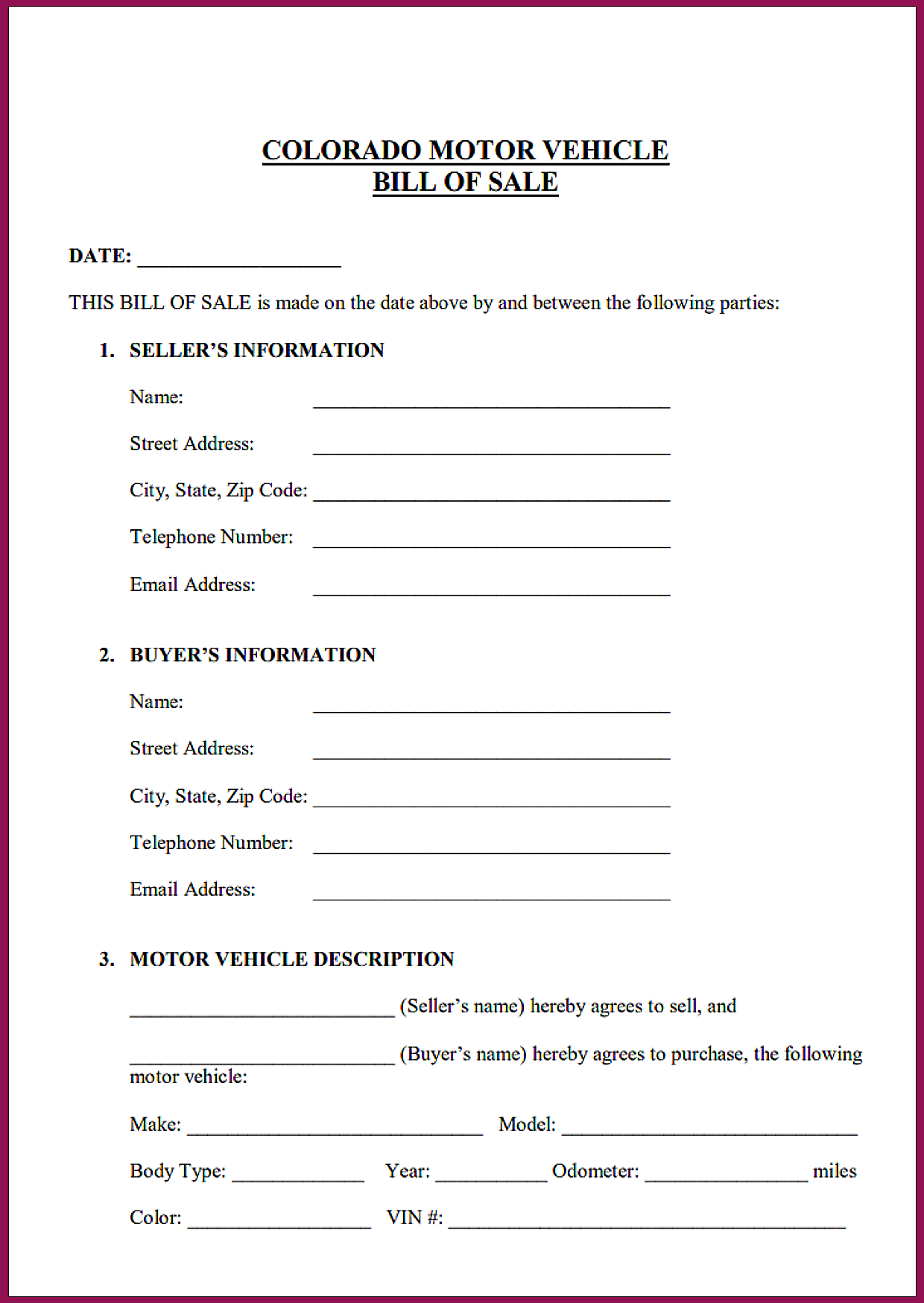
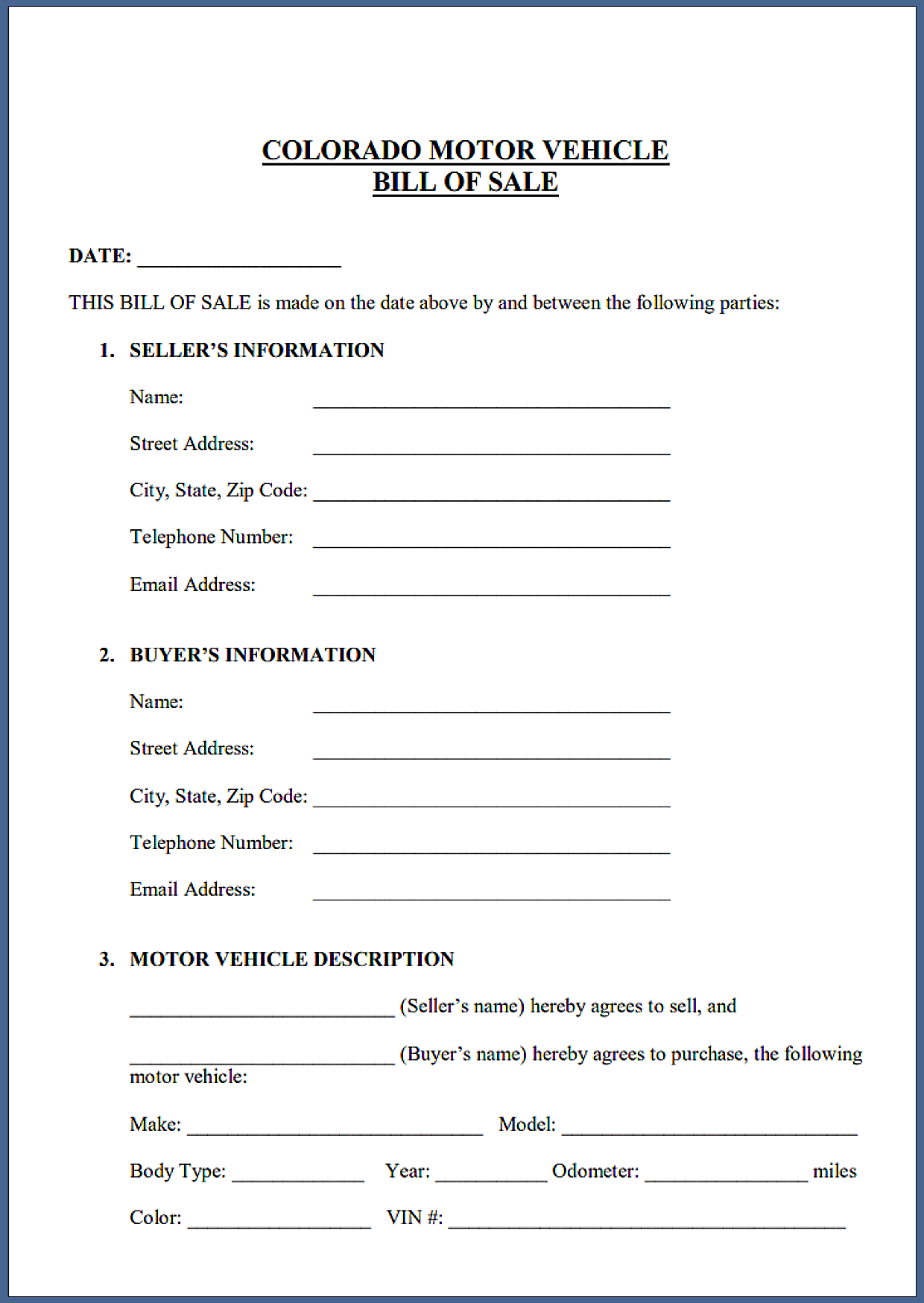
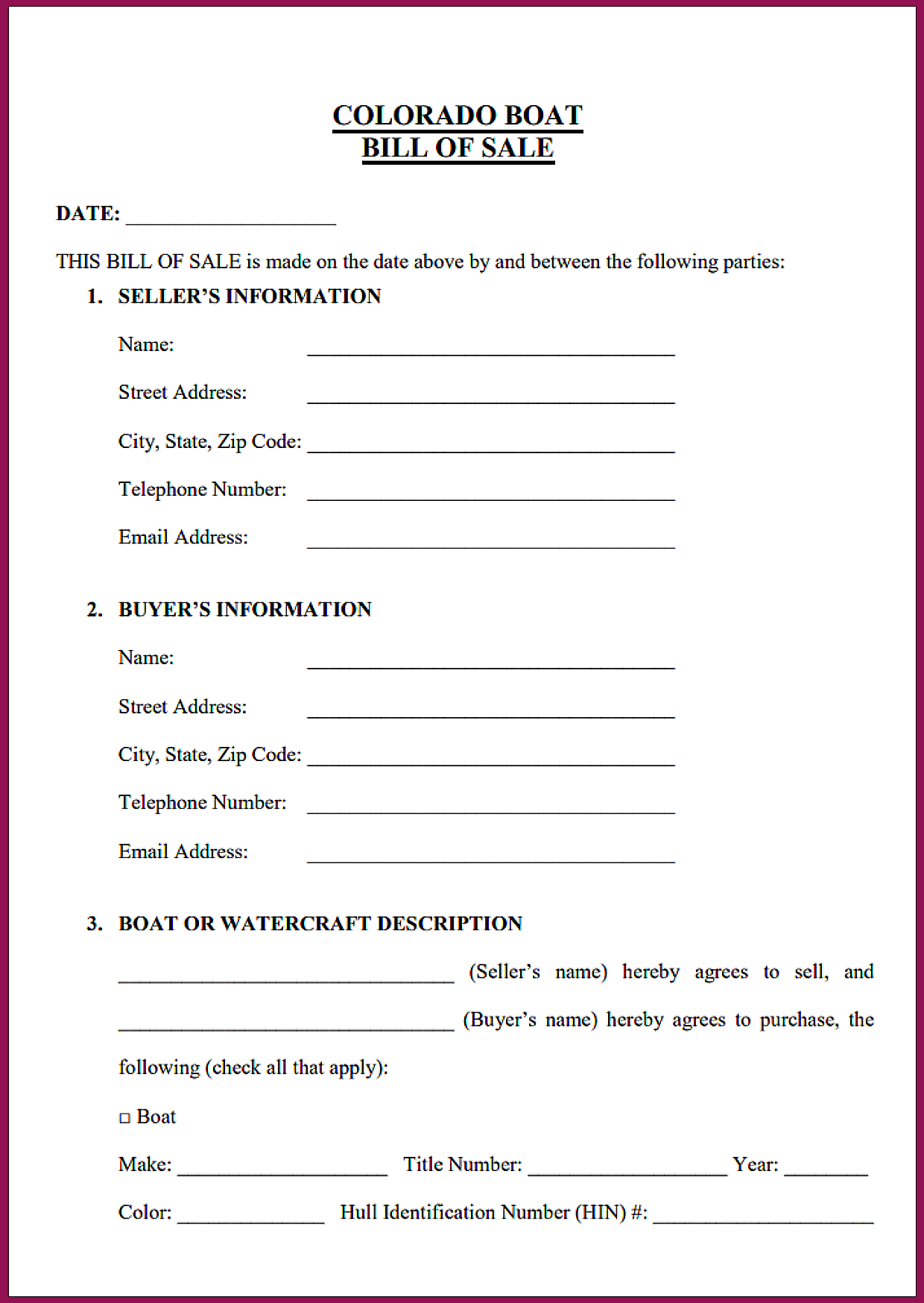
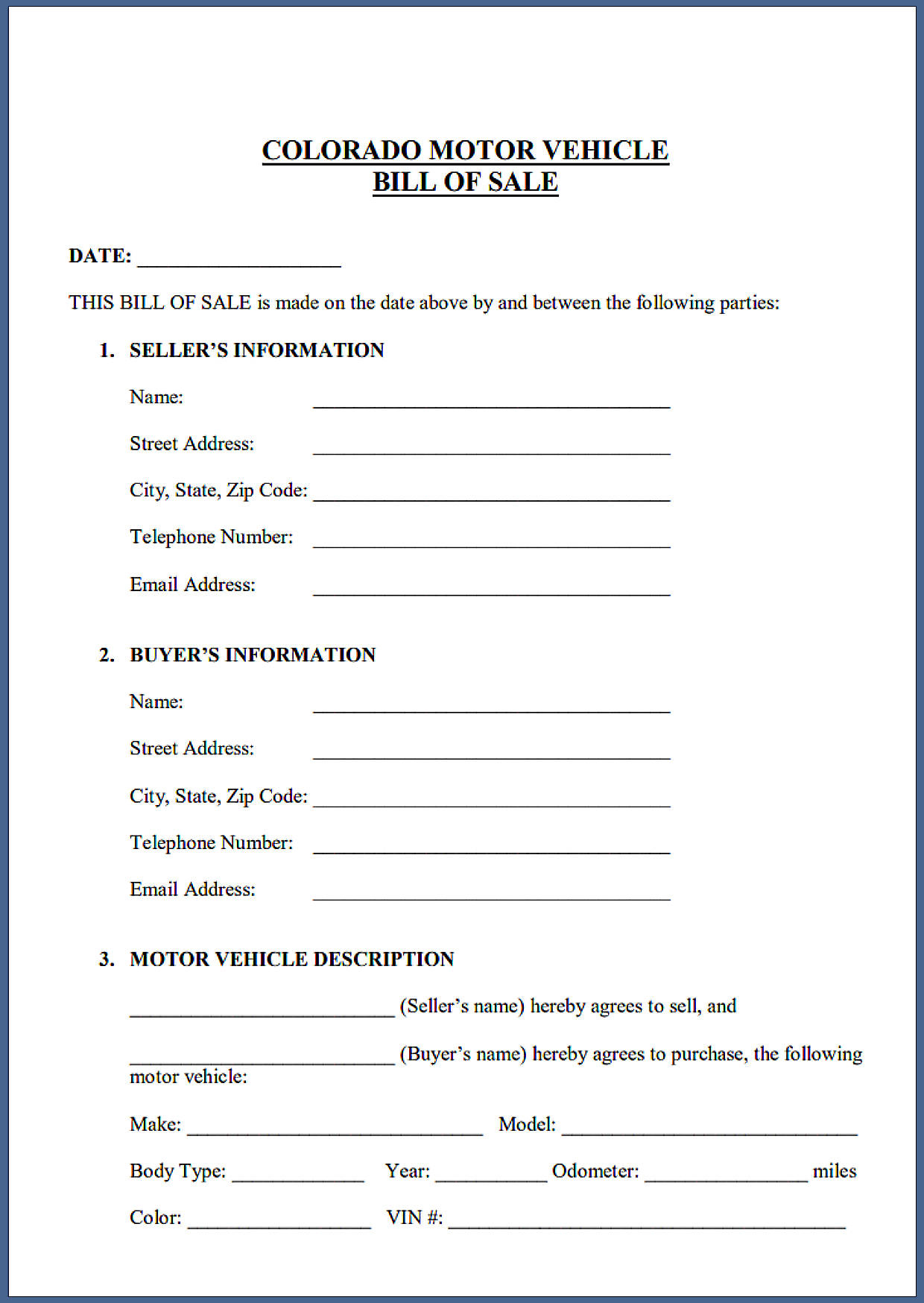
Free Blank Bill of Sale Colorado Templates
What a Bill of Sale Means in Colorado
In Colorado, a bill of sale is essentially proof that ownership of something changed hands—usually a vehicle, trailer, or sometimes personal property.
Now here’s where people get confused.
For most vehicle transfers, the title itself is the primary legal document, not the bill of sale. But the bill of sale still plays an important supporting role.
In my practice, I’ve seen a bill of sale help when:
-
The title was filled out incorrectly
-
A buyer needed proof of purchase for the DMV
-
A dispute came up about price or date of sale
-
Someone tried to claim they never actually sold the vehicle
A clear bill of sale can shut down a lot of those arguments quickly.
The Colorado Form I Usually Recommend
Personally, I usually point people toward the official Colorado DMV Bill of Sale form, known as DR 2173 from the Colorado Division of Motor Vehicles.
You can find it through the Colorado Department of Revenue website.
Now, technically speaking, Colorado law doesn’t require that exact form, but I strongly prefer using it. Why?
Because it includes all the information the DMV likes to see. That alone prevents a lot of headaches.
In my experience, handwritten bills of sale are where mistakes usually happen.
What I Always Tell Clients to Include
If someone is using a blank bill of sale, I tell them to make sure it clearly includes a few key things.
Not complicated—just complete.
Names and addresses of both parties
Sounds obvious, but I’ve seen documents with only first names.
If something goes wrong later, that makes tracking someone down nearly impossible.
Vehicle details
This part matters more than people realize. Include:
-
Vehicle Identification Number (VIN)
-
Year
-
Make and model
-
Odometer reading (for most vehicles)
Colorado DMV clerks will look for this information immediately.
Purchase price
People sometimes leave this blank or write “gift.”
That can raise questions when the vehicle is registered because taxes are involved.
Date of sale
This one is huge.
I’ve handled cases where someone received parking tickets or toll charges weeks after selling a car because the buyer never transferred the title.
Having the correct sale date documented helps protect the seller.
Signatures
Both parties should sign.
And personally? I always recommend printing names as well, not just signatures.
A Situation I See All the Time
Let me give you a realistic example.
A few years ago, a guy sold an older pickup in a private sale here in Colorado. They shook hands, signed a simple note, and the buyer drove off.
Pretty normal.
The problem? The buyer never registered the truck.
Two months later, my client started receiving automated toll road violations tied to the vehicle.
Because there was no clear bill of sale and no record of the transfer date, it took weeks of paperwork with the DMV to sort it out.
If they had filled out a proper bill of sale and kept a copy, that entire mess would have taken about five minutes to resolve.
That’s why I always say: paperwork feels boring until you need it.
When a Bill of Sale Is Especially Helpful
From my experience working with Colorado vehicle sales, a bill of sale becomes especially useful when:
-
Selling a vehicle privately
-
Selling a vehicle without plates
-
Handling older vehicles with messy title history
-
Transferring trailers or off-road vehicles
-
Documenting a low-value cash sale
I’ve even seen them used during small court disputes to prove exactly what was agreed to.
A Small Tip I Give Every Seller
Here’s something I strongly recommend to anyone selling a vehicle in Colorado.
Take a photo of the signed bill of sale and the buyer’s ID.
You’d be surprised how often people lose paperwork.
Keeping a digital copy can save you hours later if something gets questioned.
A Quick Word of Caution
I should mention—because I’m still a lawyer after all—this post is general information based on my experience practicing in Colorado.
It’s not legal advice for every situation. Some sales involve complications like liens, estate transfers, or dealership paperwork.
When things get messy, it’s always worth talking to a local attorney or contacting the Colorado DMV directly.
Final Thoughts
Over the years, I’ve watched people spend hours fixing problems that a two-minute bill of sale could have prevented.
Personally, I think of it like a receipt—but with legal weight.
If you’re selling or buying a vehicle in Colorado, slow down for a moment, fill out the form properly, and keep copies.
Trust me, your future self will thank you.
FAQs
Is a bill of sale required for a vehicle sale in Colorado?
In Colorado, the vehicle title is the main document used to transfer ownership, but a bill of sale is still very helpful. From what I’ve seen in my legal work, having a Blank Bill of Sale Colorado filled out properly can prevent confusion about the sale date, price, or who the buyer actually was. Many private sellers use it as an extra record to protect themselves if questions ever come up later.
What details should be included in a Blank Bill of Sale Colorado?
A proper bill of sale should clearly list the buyer’s and seller’s full names, addresses, and signatures, along with the sale date and purchase price. For vehicles, it should also include details like the VIN, make, model, year, and odometer reading. In my experience, leaving out these details is one of the most common mistakes people make, and it can cause delays when the buyer tries to register the vehicle.
Is a handwritten bill of sale valid in Colorado?
Yes, a handwritten bill of sale can still be considered valid in Colorado as long as it includes the correct information and both parties sign it. However, many people prefer using a blank bill of sale template because it ensures that all required details are included. Using a structured form often reduces mistakes and makes the document easier for the DMV or other agencies to accept.
Should both the buyer and seller keep a copy of the bill of sale?
Yes, both parties should always keep a copy of the signed document for their records. A bill of sale can serve as proof of the transaction if any questions arise later about ownership or payment. Many people also choose to keep a digital photo or scanned copy so they still have access to it if the original document gets lost.
Leave a Reply